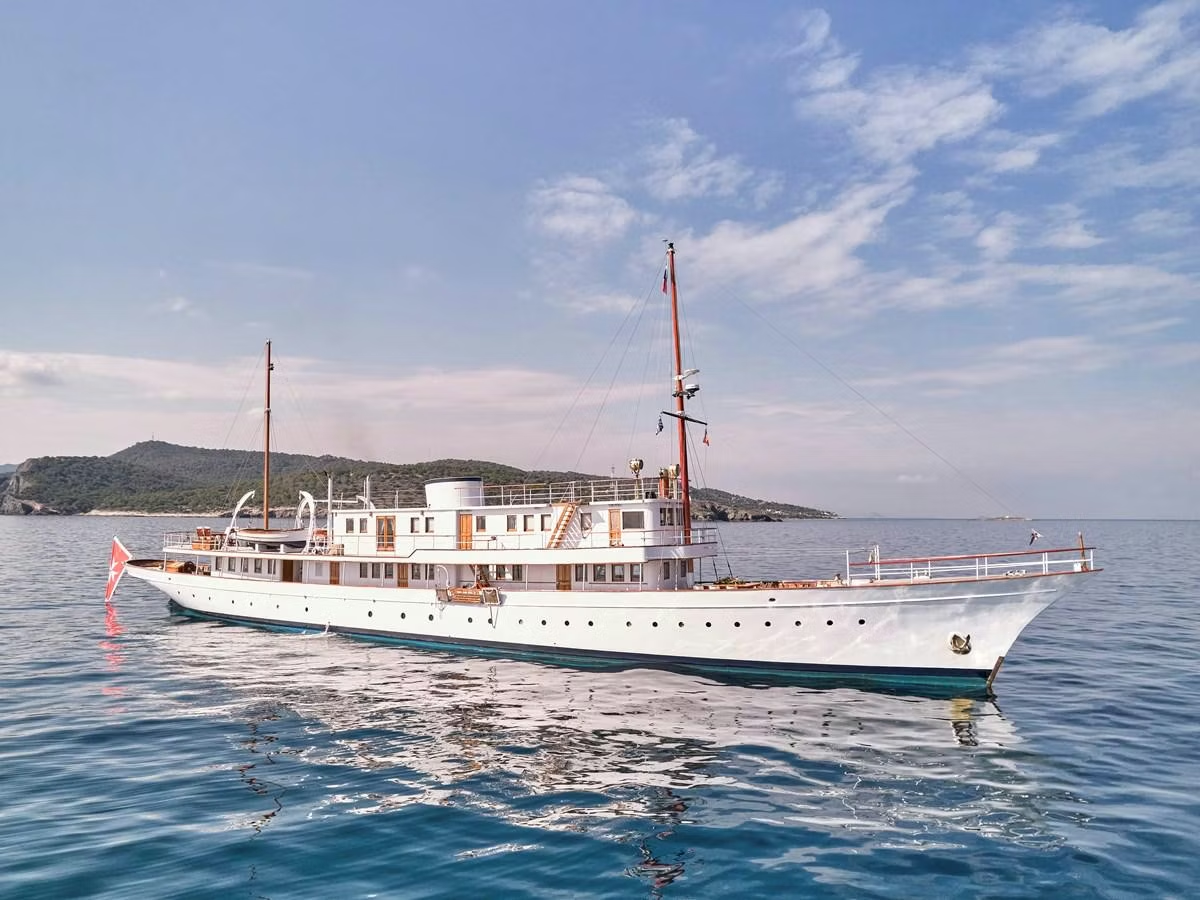

Azimut and Ferretti are frequently compared because they occupy much of the same premium Italian motor-yacht market. Both build flybridge yachts, larger crewed yachts and models intended for Mediterranean cruising.
The similarities, however, can hide some important differences.
Azimut generally gives buyers more variety in yacht type, design and propulsion. Ferretti is more tightly focused on refined flybridge cruising, with an emphasis on interior comfort, beam, storage and residential-style living.
That difference becomes easier to see when you compare actual models rather than the two brands in isolation.
Buyers can view current Azimut yachts for sale and Ferretti yachts for sale through UNICO Yachting.
Azimut vs Ferretti: The Main Differences
Attribute | Azimut | Ferretti |
|---|---|---|
Range philosophy | Several distinct yacht concepts | More concentrated around premium cruising yachts |
Design | More expressive and contemporary | More restrained and residential |
Flybridge range | Important part of a much broader portfolio | Central to the brand |
Propulsion | IPS, shafts and multiple configurations depending on range | Shaft-line propulsion common across core flybridge models |
Performance focus | Can vary dramatically between ranges | More consistent emphasis on fast, comfortable cruising |
Long-range option | Magellano crossover range | INFYNITO offers a different long-cruising proposition |
Space strategy | Design, glazing and lightweight construction | Beam, storage and practical interior volume |
Buyer profile | Buyers comparing different yacht concepts | Buyers already focused on premium cruising yachts |
The biggest distinction is therefore not simply styling. Azimut offers more ways to approach motor-yacht ownership; Ferretti offers a more consistent interpretation of it.
Azimut Gives You More Different Types of Yacht
Azimut's range is unusually broad.
A buyer can remain within the same manufacturer while considering yacht types, such as Fly, S, Magellano and Grande, that have quite different cruising briefs.
The Azimut S8, for example, uses three Volvo Penta IPS 1350 engines, reaches up to 34 knots and places performance at the centre of the proposition. The Magellano 60 takes almost the opposite approach: it uses a semi-planing Dual Mode hull, twin MAN diesels with shaft-line propulsion and has a published cruising speed of 18 knots. Azimut Yachts
That matters because “I want an Azimut” is not yet a complete buying brief.
A buyer interested in an S8 may prioritise acceleration, design and sportier cruising. Someone interested in a Magellano may care more about range, fuel use and comfort at moderate speeds.
Ferretti is more focused.
Its core flybridge models, such as the 500, 670, 720, 780 and 860, follow a clearer progression towards larger accommodation, more crew separation and more substantial onboard systems. UNICO's current pre-owned inventory reflects that progression, from the Ferretti 500 through to multiple 800-series yachts. Unico Yachting
The Fly 68 and Ferretti 670 Show the Difference Particularly Well
The Azimut Fly 68 and Ferretti 670 sit close enough in size to demonstrate how differently two Italian builders can interpret the same brief.
The Azimut Fly 68 measures 20.98 metres overall with a 5.23-metre beam. It has four guest cabins plus crew accommodation and uses twin Volvo IPS 1350 engines. Published performance is up to 32 knots, with a 27-knot cruising speed. The construction combines GRP with carbon fibre. Azimut Yachts
The Ferretti 670 is slightly shorter at 20.24 metres, but wider at 5.38 metres. It offers three or four guest cabins plus crew, uses twin MAN V8 engines and has published cruising speeds of 25 knots with the standard engines or 28 knots with the optional package. ferretti-yachts.com
Those figures reveal several real differences.
Azimut Fly 68
longer overall;
slightly narrower;
four guest cabins;
IPS propulsion;
carbon fibre used in the structure;
strong emphasis on design and performance packaging.
Ferretti 670
slightly shorter;
15cm wider;
three- or four-cabin flexibility;
conventional MAN-powered flybridge proposition;
strong emphasis on storage, owner accommodation and usable volume.
Even before stepping aboard, the entity–attribute–value relationships are different:
Azimut Fly 68 → propulsion → twin Volvo IPS 1350
Ferretti 670 → engines → twin MAN V8
Azimut Fly 68 → beam → 5.23m
Ferretti 670 → beam → 5.38m
Those attributes affect far more than a specification table. They influence machinery packaging, manoeuvring, accommodation and how the yacht feels inside.
Azimut Tends to Use Technology to Create Space; Ferretti Often Starts with Volume
Azimut has used technologies, such as carbon-fibre structures and IPS propulsion, to influence how weight and machinery are distributed.
On the Fly 68, carbon fibre is part of the construction and IPS pods move the propulsion architecture away from a conventional shaft arrangement. Azimut Yachts
Those decisions can give designers more freedom when arranging accommodation.
Ferretti often approaches the problem differently.
The current Ferretti 670 has a notably broad beam for its length and offers either three or four cabins. Its owner's suite occupies around 18 square metres, and the design includes a walk-in wardrobe, en-suite bathroom and optional fourth cabin. ferretti-yachts.com
So when comparing interiors, don't simply ask:
Which yacht feels bigger?
Ask where the volume comes from.
Azimut may achieve space through engineering and packaging. Ferretti may give you additional beam, storage and a more residential cabin arrangement.
Those are different solutions to the same problem.
Ferretti Usually Feels More Residential
The difference becomes particularly noticeable in areas, such as master cabins, storage spaces and crew arrangements.
Ferretti increasingly describes its flybridge yachts around a “home at sea” concept. On the latest Ferretti 720, for example, the lower deck has four guest cabins, a walk-in wardrobe in the owner's suite and a double crew cabin with its own bathroom, laundry station and direct access to the engine room. The flybridge itself covers around 41 square metres. Ferretti Group
That is a very clear design priority.
Ferretti is not simply trying to fit the maximum number of features aboard. It is attempting to make larger yachts function more like residences.
Azimut tends to be more visually expressive. Characteristics, such as extensive glazing, sculpted superstructures and stronger distinctions between model families, play a larger role in the experience.
For a buyer, that means the choice can be surprisingly straightforward.
If you want the yacht to make a stronger design statement, Azimut may pull you in more quickly.
If storage, cabin organisation and extended living aboard matter more, Ferretti deserves especially close inspection.
Propulsion Can Make the Ownership Experience Quite Different
This is one of the most tangible differences.
Azimut uses several propulsion strategies across its portfolio.
Examples include:
Fly 68 → twin IPS
S8 → triple IPS
Magellano 60 → shaft-line propulsion
Ferretti's conventional flybridge models commonly use shaft-line arrangements, with joystick and positioning systems available on some generations to improve close-quarters handling. Ferretti previously developed joystick control specifically around direct shaft-line installations, rather than switching the entire proposition to pod propulsion. ferretti-yachts.com
This creates a meaningful buying decision.
IPS can deliver excellent joystick manoeuvrability and free designers to package machinery differently.
Shafts offer a more traditional drivetrain that many experienced captains, engineers and owners understand extremely well.
Neither should be treated as inherently superior.
On a pre-owned yacht, the important attributes include service history, oil analysis, seals, running gear and alignment.
A well-maintained shaft-driven Ferretti can be a better technical purchase than a neglected IPS-equipped Azimut. The reverse is equally true.
Azimut Makes More Sense if You Haven't Decided What Type of Yacht You Want
This is probably the most fundamental difference between the two brands.
If a buyer says:
“I want a 65–80ft Italian motor yacht, but I haven't yet decided whether I want a flybridge, sporty yacht or longer-range cruiser.”
Azimut offers more routes.
You can move between a Fly model, performance-oriented S yacht or Magellano without leaving the builder.
Ferretti makes more sense when the brief is already clearer:
“I want a refined flybridge yacht for comfortable Mediterranean cruising.”
In that situation, models, such as the Ferretti 670, 720 and 780, create a logical size progression rather than fundamentally different yacht concepts.
So:
Azimut → greater conceptual choice
Ferretti → greater consistency within the cruising proposition
That is a more useful distinction than saying one is “sportier” and the other “more luxurious”.
The Equipment List Can Hide the Real Cost Difference
Two pre-owned yachts of similar size may have very different system counts.
Equipment, such as stabilisers, hydraulic platforms, watermakers, tender garages, passerelles and upgraded generators, improves comfort but also creates maintenance obligations.
This is where our complexity budget becomes useful.
Don't just calculate what you can afford to buy.
Calculate how much yacht you want to maintain.
A heavily optioned Azimut may deliver impressive capability but bring several additional technical systems. A larger Ferretti may introduce more crew infrastructure, hotel systems and machinery simply because the yacht is designed for longer periods aboard.
Ask of every major option:
Will we actually use it?
What does it cost to service?
Is there local technical support?
How expensive is failure?
Does it improve resale?
An unused system is still a system that requires maintenance.
On the Pre-Owned Market, Generation Matters Almost as Much as Brand
Azimut and Ferretti have both evolved substantially.
A ten-year-old model should not be used to define the current brand.
Changes between generations can involve attributes, such as propulsion, glazing, cabin layouts, stabilisation and helm technology.
Condition can create an even bigger difference.
When comparing used yachts, examine:
engine and generator servicing;
propulsion history;
stabilisers;
hydraulic systems;
electronics;
air-conditioning;
teak;
glazing and seals;
refit records;
VAT documentation.
A professional pre-purchase yacht survey should therefore be part of the comparison, particularly when two yachts have similar asking prices but very different ages or specifications.
Azimut or Ferretti: The Difference Is Clearer Than It Looks
Azimut is the stronger starting point for buyers who want choice between substantially different yacht concepts. Its use of IPS, carbon fibre and distinct model families means one Azimut can be very different from another.
Ferretti offers a more consistent proposition. Its core flybridge yachts focus heavily on beam, accommodation, storage, comfortable cruising and the transition towards larger crewed ownership.
So the decision can be simplified.
Choose Azimut's side of the shortlist if priorities, such as contemporary design, propulsion technology and range diversity, matter most.
Look particularly closely at Ferretti if priorities, such as residential comfort, storage, cabin flexibility and extended living aboard, carry more weight.
Then stop comparing the brands.
Compare the two actual yachts in front of you.
Their condition, specification, propulsion history and suitability for your cruising programme should ultimately matter more than either logo.
Browse current Azimut yachts for sale, Ferretti yachts for sale or UNICO's wider selection of yachts for sale. Our Yacht Buying Guide also explains the wider acquisition process.