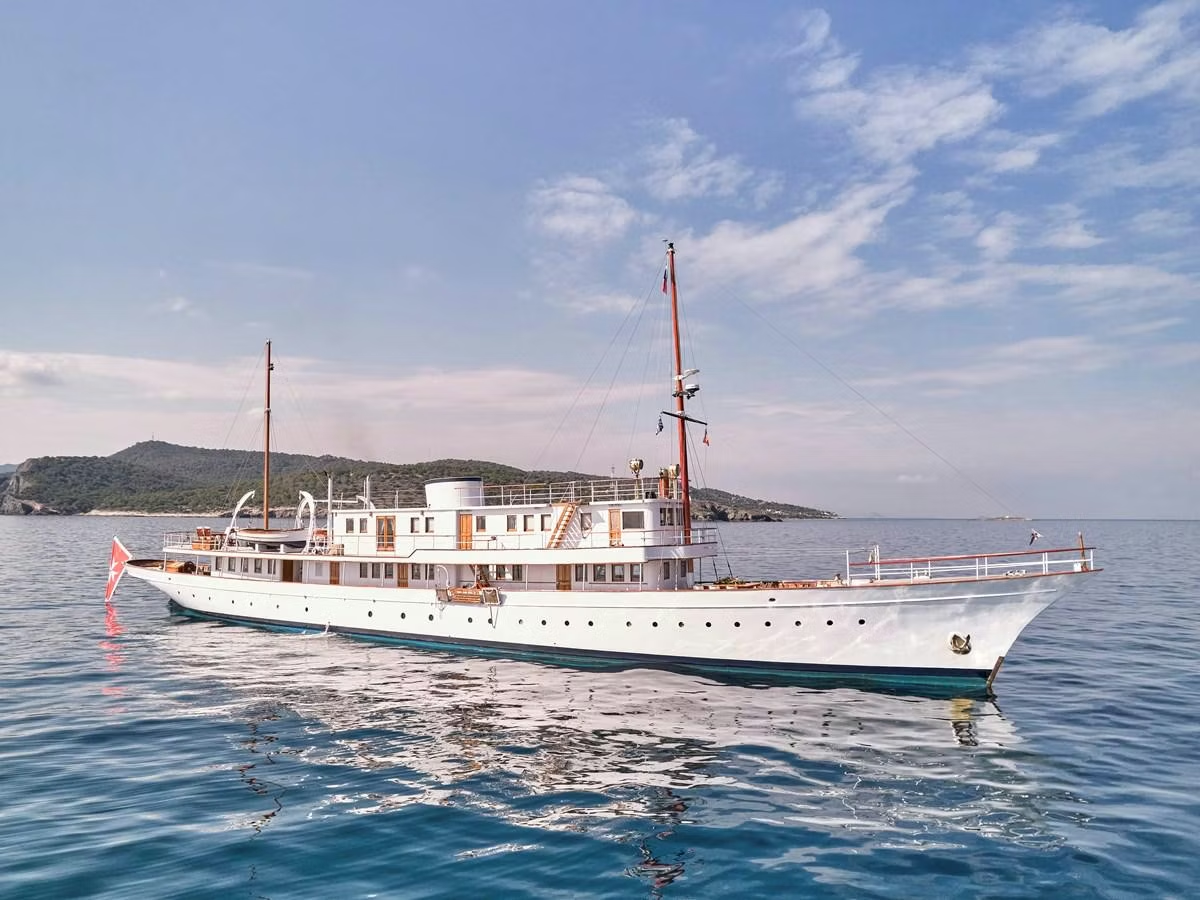
Princess Yachts occupies a very specific place in the luxury motor yacht market. It is British, polished, practical and quietly confident. Based in Plymouth, England, Princess has built its reputation around refined motor yachts that combine strong seakeeping, usable layouts and elegant finishing without feeling overly theatrical.
That balance is a major reason why buyers are drawn to Princess Yachts. The brand appeals to owners who want comfort, quality and recognisable prestige, but not necessarily the loudest-looking yacht in the marina. A Princess often feels considered rather than exaggerated. The saloons are bright, the side decks are usable, the helm positions make sense, and the accommodation is arranged for real cruising rather than brochure photography alone.
This is where Princess differs from more flamboyant or performance-led builders. It still offers speed, style and presence, but the underlying message is usually calmer: this is a yacht for people who want to use it properly. Family cruising, Mediterranean holidays, owner-operated boating, flybridge entertaining and crewed yacht ownership all sit naturally within the Princess world.
A good Princess should feel like it was designed by people who understand how owners actually move, sit, dock, dine, sleep and host on board. That may sound simple. It is not.
A Short History of Princess Yachts: From Plymouth Shed to Global Name
Princess began in Plymouth in the 1960s, and that origin still matters. Plymouth is not just a convenient headquarters; it is part of the brand’s identity. The city has a serious marine culture, a skilled boatbuilding workforce and immediate access to demanding coastal waters. Yachts built and tested there are not born in a sheltered fantasy. They are shaped near the edge of the English Channel, where conditions can change quickly and where a boat’s behaviour at sea matters.
The company grew from modest beginnings into one of Britain’s best-known luxury yacht builders. Early models were practical and production-focused, but over time Princess moved into larger flybridge yachts, sports yachts and motor yachts with increasingly sophisticated interiors. Its development has been evolutionary rather than erratic. That is important for buyers because consistency builds trust.
Princess is a continuity brand. It has not needed to reinvent itself every few years to remain relevant. Instead, it has refined its hulls, improved its interiors, expanded its model ranges and responded to changing owner expectations. That makes the brand particularly appealing in the brokerage market, where buyers often compare past models against newer ones and want to understand how the design language has matured.
The value of Princess history is not nostalgia alone. It is proof of accumulated learning: where to put the galley, how wide a side deck needs to feel safe, how much glass is enough, where crew access should be separated, and how a family actually lives aboard for more than a weekend.
Understanding the Princess Yacht Range
Princess currently covers several different owner profiles through its C, V, S, F, Y and X Class lines. Rather than thinking of these ranges as simple size categories, it is more useful to think of them as different personalities.
C Class: Open Day Luxury
The C Class brings Princess styling into a centre-console format. This is a more open, day-focused style of yacht designed around movement, sunshine and a closer connection to the water. It suits owners who want a luxury day boat, island-hopping platform, chase boat or tender-style vessel with proper brand pedigree.
The appeal is not cabin volume. It is freedom. Wide walkaround decks, open seating and quick access to the sea make this class especially relevant for warm climates, short passages and owners who want something more exciting than a conventional small cruiser.
V Class: Sports Yacht Performance
The V Class is where Princess leans into its sports yacht identity. Models such as the V40, V50, V55 and V65 are aimed at owners who enjoy speed, handling and open-air driving. Expect low-profile lines, a sport cockpit, opening roof options, strong performance and enough accommodation for weekends or short cruising periods.
These models suit owners who still want to feel connected to the driving experience. They are not floating apartments. They are elegant performance cruisers with practical luxury built in.
S Class: Sportbridge Luxury
The S Class sits between a sports yacht and a full flybridge yacht. Models such as the S65, S72 and S80 offer a sleeker profile than the F Class, but still provide an upper-deck social area. This is useful for buyers who like the look and feel of a sports yacht but do not want to sacrifice the extra outdoor space of a bridge deck.
The S Class is a good example of Princess understanding compromise. Some owners want speed and clean lines. Others want a flybridge. The sportbridge gives them both, though in a more compact and performance-orientated format.
F Class: Classic Flybridge Cruising
The F Class is the Princess flybridge heartland. Models such as the F45, F50, F54, F55, F58 and F65 are natural choices for family cruising, entertaining and owner-operated boating. They usually offer a lower helm, a flybridge helm, upper-deck seating, saloon comfort and practical accommodation.
For many buyers, this is the most recognisable Princess experience: a refined British flybridge motor yacht with enough space for guests, good visibility and a layout that works for Mediterranean cruising.
Y Class: Larger Motor Yacht Comfort
The Y Class moves into larger luxury motor yacht territory. Models such as the Y72, Y80, Y85 and Y95 offer more volume, larger saloons, multiple guest cabins, crew accommodation and extended cruising comfort. These yachts may still be owner-led in spirit, but they increasingly benefit from professional crew support.
The Y Class suits buyers who want a serious motor yacht without stepping fully into custom superyacht complexity.
X Class: Super Flybridge Volume
The X Class is Princess’s volume-led super flybridge concept. Models such as the X80, X90 and X95 Vista feel closer to mini-superyachts in the way they prioritise interior space, upper-deck living and flexible arrangements. The X Class is for owners who want more enclosed volume, longer stays aboard and a layout that feels less conventional.
In simple terms: C Class is open day luxury, V Class is speed and style, S Class is sporty entertaining, F Class is flybridge family cruising, Y Class is refined motor yacht comfort, and X Class is volume-led superyacht thinking.
Design DNA: What Makes a Princess Feel Like a Princess?
Princess design is not difficult to recognise, but it is rarely excessive. The exterior lines are clean and balanced, with large hull windows, sculpted hardtops, flybridge profiles and practical side decks. The styling feels modern without chasing every passing trend.
Inside, Princess yachts tend to favour bright saloons, panoramic glazing, soft luxury, understated finishes and sensible storage. The galley position varies by model, but the best Princess layouts have a calm logic to them. Guests can move from cockpit to saloon to foredeck or flybridge without feeling as if they are cutting through awkward private zones.
Practical features matter. Hydraulic bathing platforms, tender storage, aft cockpit seating, foredeck lounges, flybridge wet bars and crew separation on larger models all affect how the yacht is used. These are not minor details. They shape the daily rhythm on board.
One reason Princess interiors age well is that they do not depend entirely on shock value. A highly dramatic interior can look dated quickly. A well-planned Princess often feels more like a coastal home: bright, composed and quietly luxurious.
My own view is that Princess design should be judged by how calmly it works at sea, not just how attractive it looks under boat-show lighting. When guests are moving around, towels are drying, lunch is being served, children are heading to the swim platform and the captain is preparing to berth, good design becomes obvious.
Performance, Hull Design and Seakeeping
Princess has long been associated with a balance between performance and comfort. Many models use planing hulls and are designed to cruise at speed, but they are not purely about top-end numbers. For most owners, the more important figure is comfortable cruising speed: how the yacht feels at 22, 25 or 28 knots, what fuel it burns, how noisy the saloon is, and whether guests still feel relaxed underway.
A Princess should feel composed. The steering should be predictable, trim response should be clean, and the hull should not feel nervous when conditions are less than perfect. Of course, model, loading, engine choice, maintenance condition and sea state all matter.
On a sea trial, buyers should do more than sit at the main helm and admire the view. Test acceleration. Listen for vibration. Check for smoke on acceleration. Observe trim behaviour. Ask for fuel burn at cruising speed. Test the bow and stern thrusters. If stabilisers are fitted, test them. Move through the saloon, aft cockpit, flybridge, cabins and bow area while the yacht is underway.
This is a point many buyers underestimate. Luxury is not only what you see when the yacht is still. It is what remains quiet, secure and controlled when the yacht is moving.
A Princess that looks beautiful at rest but feels loose, rattly or strained underway needs further investigation. The inspection is not finished just because the cushions look new.
Princess Yachts by Owner Type
Different Princess models suit different owners. The right choice depends less on prestige and more on how the yacht will actually be used.
First-Time Luxury Yacht Buyers
First-time buyers may be drawn to the V40, V50, F45, F50 or C Class models. These are more approachable in size and running costs, and some can be owner-operated with the right experience and training. They still require proper maintenance and respect, but they are less operationally complex than larger Y Class or X Class yachts.
For someone moving up from a smaller sports cruiser, a compact Princess can feel like a significant upgrade without becoming overwhelming.
Family Owners
Families are often better served by the F Class, larger V Class, or Y Class. Cabin count, safe side decks, shaded areas, saloon visibility, galley access, storage and bathing platform usability all become important. Children want easy water access. Parents want safe movement. Guests want privacy. The yacht needs to work for everyone, not just look good in profile.
Charter-Focused Buyers
For charter-minded owners, larger F Class models, the Y Class and X Class are stronger candidates. Charter guests value cabin comfort, crew service, flybridge dining, water toys, outdoor space and good photography. A Princess can work well in charter because the brand is recognisable without feeling intimidating.
Owners considering charter should also think about coding, crew accommodation, maintenance load and how quickly soft furnishings will wear under repeated guest use. A charter yacht is not used like a private yacht. It works harder.
Experienced Owners Upgrading
Experienced owners often move towards S Class, Y Class or X Class yachts because they understand what extra volume, crew separation and more sophisticated systems can offer. They are also more realistic about the costs.
The right Princess is not always the largest one. The best yacht is the one where the owner naturally uses every space. Unused volume is expensive theatre.
New vs Pre-Owned Princess Yachts
Buying new gives you the latest design, warranty protection, modern electronics, factory support and the ability to select finishes. It also usually means a higher purchase price and, depending on demand, a delivery timeline.
Buying pre-owned gives you faster availability and often stronger immediate value. The brokerage market includes many desirable Princess models from past generations: older F Class flybridges, V Class sports yachts, discontinued S Class models and larger Y Class yachts. For many buyers browsing luxury yachts for sale, a well-kept pre-owned Princess can be one of the most sensible options in the British yacht category.
The key is condition. Warning signs include worn teak, cloudy canopy panels, tired upholstery, old electronics, incomplete service records, engine room corrosion, hydraulic platform faults and air conditioning issues. Some problems are relatively easy to refresh: cushions, carpets, AV systems, lighting, upholstery and electronics. Others are expensive and potentially serious: engine neglect, generator replacement, structural GRP issues, stabiliser problems, shaft alignment and water ingress.
A used Princess with honest wear and perfect paperwork may be better than a newer-looking yacht with missing records. Cosmetics tell you how the yacht was presented; the engine room tells you how it was owned.
Princess vs Sunseeker, Fairline, Azimut, Ferretti and Galeon
Buyers often compare Princess with other leading brands, and the answer is rarely as simple as “better” or “worse”. Each builder has a different personality.
Compared with Sunseeker, Princess is generally more refined, composed and understated. Sunseeker feels sportier and more extroverted, with a stronger cinematic edge. Choose Princess for calm luxury and practical cruising. Choose Sunseeker for bolder style and performance theatre.
Compared with Fairline, Princess often carries broader global recognition and stronger premium positioning. Fairline can be a very attractive option for buyers seeking British quality at a more accessible price point, but Princess usually has greater prestige and brokerage pull.
Compared with Azimut, Princess feels more restrained and practical. Azimut leans into Italian design flair, contemporary interiors and dramatic exterior styling. Princess is the choice for timeless usability; Azimut is ideal for buyers who want stronger Mediterranean design expression.
Compared with Ferretti Yachts, Princess feels slightly more approachable and owner-friendly, while Ferretti often presents a more formal Italian elegance with deep engineering polish.
Galeon is a different comparison. Galeon often attracts attention through folding decks, clever cockpit transformations and value-led innovation. Princess offers stronger traditional brand cachet and a more established luxury identity.
A useful way to think about it is this: Princess is calm, polished and practical; Sunseeker is bold and cinematic; Azimut is stylish and contemporary; Ferretti is refined and technical; Galeon is inventive and feature-led.
Ownership Costs, Maintenance and Practical Realities
Princess ownership costs depend heavily on model size, usage, age, location and whether the yacht is privately used or chartered. Fuel, servicing, berthing, insurance, winterisation, cleaning, haul-outs, parts, surveys and crew all need to be budgeted properly.
As a rough ownership framework, 40-50ft models may be manageable for experienced owner-operators with professional support. Between 50-65ft, some owners still self-operate, while others prefer skipper assistance. From 70-85ft, regular crew support becomes more common. Around 90ft and above, most yachts are professionally crewed.
Mediterranean ownership brings its own realities. Summer berths are competitive. UV damages cushions, teak and covers. Air conditioning systems work hard. Fuel use rises quickly with fast cruising. Winter servicing is not optional if you want the yacht ready for the next season.
Common maintenance areas include teak decks, hydraulic platforms, passerelles, hardtop mechanisms, sliding doors, air conditioning, generators, IPS or shaft systems, stabilisers and navigation electronics. Owners who want structured ongoing support should consider professional yacht care, especially if the yacht is used seasonally or kept away from the owner’s home base.
Budget for ownership based on how you will actually use the yacht, not how you imagine using it. A yacht that sits in a marina still costs money; a yacht that cruises hard costs money differently.
Chartering a Princess Yacht: What Guests Should Know
Princess yachts are popular in charter because they are comfortable, recognisable and easy for guests to understand. The layouts tend to suit families, couples and groups who want polished cruising rather than chaos. Flybridge models are especially attractive because they offer outdoor dining, sun lounging, shaded areas and strong guest flow.
Common charter destinations include the French Riviera, Balearics, Amalfi Coast, Sardinia, Croatia, Greece and the Caribbean. Guests planning a Mediterranean itinerary can explore Mediterranean yacht charters to understand how route, season and yacht size affect the experience.
Before booking a Princess charter, guests should check cabin layout, crew experience, stabilisers, water toys, tender quality, shaded deck areas, flybridge dining, air conditioning and fuel policy. They should also understand APA, which usually covers extras such as fuel, food and drink, marina fees, transfers and gratuities.
A Princess charter works best when the itinerary uses the yacht’s strengths: comfortable cruising, civilised lunches at anchor, short hops between glamorous ports, and evenings where guests return to a yacht that feels calm rather than overdesigned.
Resale Value and Brokerage Market Perception
Princess has strong brokerage appeal because it is internationally recognised, well documented and widely understood by buyers, brokers and surveyors. The brand’s practical layouts and family-friendly image help demand, particularly for flybridge models.
Resale strengths include British brand reputation, model familiarity, dealer support, strong flybridge demand, practical layouts and broad buyer appeal. Risks include poor documentation, high engine hours, tired teak, dated electronics, heavily chartered interiors, older engines and unfavourable VAT or title position.
Price depends on age, model, engine package, maintenance history, location, tax status, specification and berth availability. A clean ownership file can be as valuable as shiny upholstery. In some cases, paperwork will decide whether a buyer proceeds at all.
This is especially important in cross-border yacht transactions, where title history, VAT evidence and registration documents matter. Owners reviewing flag options can also consider flag registration as part of the wider ownership structure.
A good Princess sells because the story is easy to understand: good ownership, clear service history, clean survey and sensible specification. Confusion kills buyer confidence.
What to Look for When Inspecting a Used Princess Yacht
A used Princess should be inspected in layers. Start with the exterior and decks: teak wear, gelcoat cracks, stainless rails, bathing platform, passerelle, cockpit doors, flybridge seating, hardtop condition and foredeck cushions.
Then go below the surface. Engines, generators, thrusters, stabilisers, fuel systems, cooling systems, air conditioning, hydraulics, batteries, shore power and navigation electronics all need proper testing. Do not let a beautiful saloon distract you from a tired engine room.
Interior checks matter too. Look at saloon joinery, flooring, headliners, cabin smell, mattresses, galley equipment, heads, plumbing, water staining, upholstery and lighting. Smell is underrated. A damp cabin tells a story long before the survey report arrives.
Paperwork should include VAT status, title history, finance clearance, flag registration, CE or RCD documentation where relevant, service records, invoices, survey reports and charter coding if the yacht has been commercially used.
A sensible buying sequence is simple: review documents before travelling, inspect the exterior and deck gear, inspect the engine room, review electronics and systems, complete a sea trial, commission a full yacht survey, then negotiate based on documented defects.
Princess yachts tend to present beautifully, even when they need work. Slow down. Open lockers. Check bilges. Let the surveyor interrupt the fantasy.
Ownership Change, Brand Direction and After-Sales Support
Princess has experienced corporate ownership changes, including KPS Capital Partners taking controlling ownership in 2023. For buyers, the practical question is not only who owns the company, but what that means for warranty confidence, model development, production continuity, dealer support and parts availability.
Brand ownership can change without instantly changing yacht quality. Boats already built are judged by their condition, maintenance and documentation. New buyers, however, should pay attention to after-sales structure, authorised service, technician availability, manuals, parts supply and dealer network.
Princess benefits from a large installed fleet. That matters because where there are many boats, there is usually stronger demand for parts, expertise and service knowledge. For owners keeping a yacht in the Mediterranean, the availability of technicians can be more important than a corporate headline.
For most owners, brand ownership matters less than whether someone can source the right part quickly in August when the yacht is meant to be in Sardinia. Practical support is what keeps a luxury yacht feeling luxurious.
Owners who want broader assistance with logistics, maintenance coordination or operational matters can use professional yacht support to reduce the friction of ownership.
Who Should Buy a Princess Yacht - and Who Maybe Shouldn’t?
Princess is a strong fit for buyers who want refined British styling, practical luxury, family cruising, reliable layout logic, strong flybridge options, good seakeeping image, recognisable branding, strong brokerage appeal and polished interiors.
It is particularly well suited to Mediterranean owners who want comfort without excessive drama. A Princess makes sense for a family moving up from a smaller sports cruiser, an owner wanting a refined flybridge yacht, or charter guests who value comfort and polish over party-boat excess.
Princess may not be ideal for buyers who want extreme high-speed performance above all else, very flamboyant exterior styling, expedition-grade range, ultra-low-cost ownership, simple low-tech boating or full custom superyacht freedom. Those buyers may be better served by performance-first, explorer or fully custom brands.
Financing may also shape the final decision. Buyers comparing cash purchase, asset-backed lending or staged payment structures can explore yacht finance before narrowing the shortlist.
A Princess should be chosen because you value balance: comfort without blandness, performance without drama, and luxury that still works when the boat is full of guests, towels, provisions and plans.