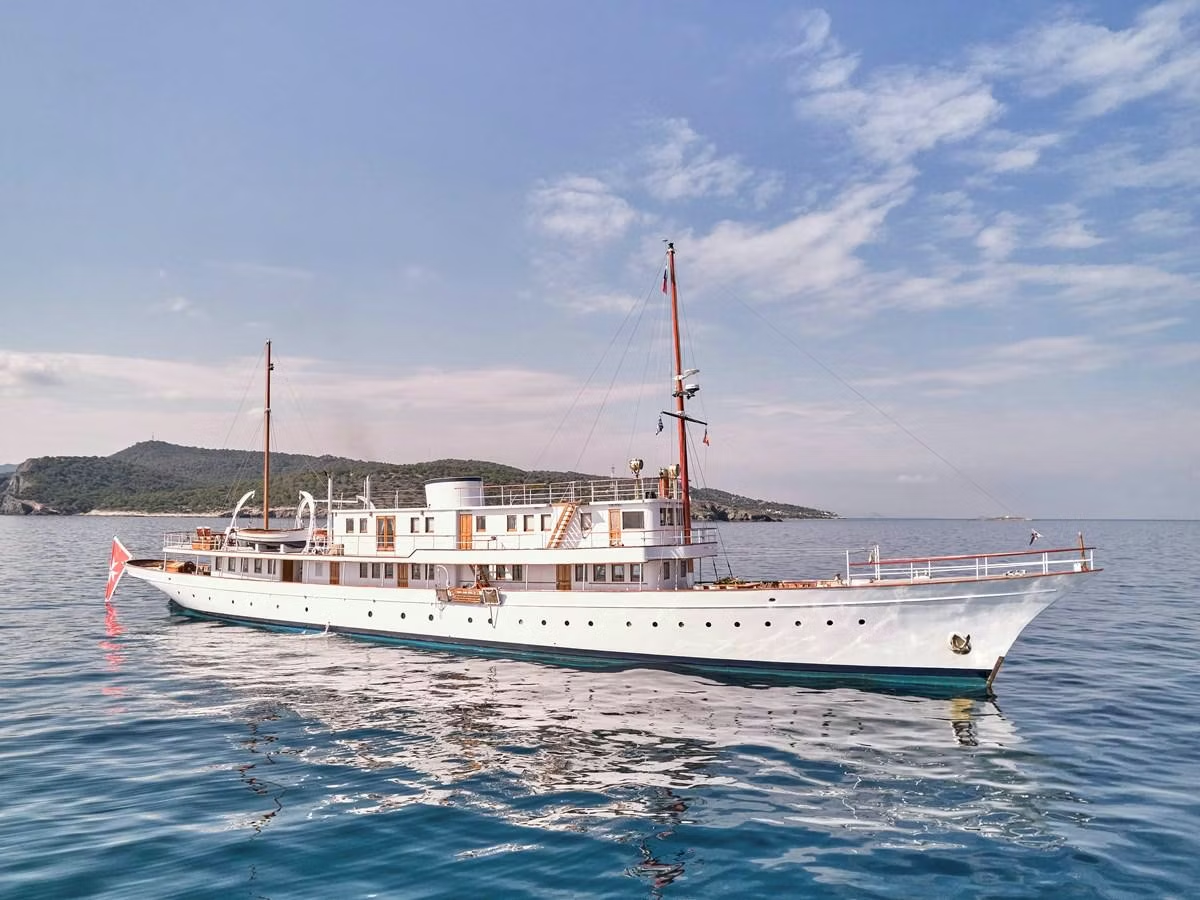
Prestige Yachts is a French luxury motor yacht brand known for practical cruising layouts, bright interiors, flybridge models, sport-style coupés, volume-focused yachts and motor-powered multihulls. The brand is built around a clear promise: comfortable family cruising with enough style, space and refinement to compete in the premium motor yacht market.
Prestige describes its yachts as being designed for family journeys from 40 to 70 feet, with a combination of French craftsmanship and Italian design influence. Its current range includes four main lines: F-Line, S-Line, X-Line and M-Line. Each one serves a different type of owner, from flybridge cruising to sportier coastal use and multihull comfort.
Prestige is especially relevant for buyers who want a yacht that feels luxurious but not intimidating. Many models are designed for owner-operators, families and private users who want easy movement on board, manageable size, good visibility, comfortable cabins and practical social areas. Compared with some Italian and British competitors, Prestige often appeals to buyers who value space, light and usability over aggressive styling or extreme performance.
The History of Prestige Yachts
Prestige Since 1989
Prestige has been developing motor yachts since 1989, with a strong focus on repeatable build quality, practical layouts and comfortable cruising. The brand’s official history highlights the Prestige 36 as a key milestone because it introduced Prestige into the flybridge motor yacht segment and helped create the first generation of the F-Line range.
That history explains a lot about the brand today. Prestige is not positioned as a custom superyacht builder. It is a production luxury yacht brand, meaning its yachts are built around established model platforms, factory processes, known layouts and a broad dealer network. For owners, that can make buying, servicing, comparing and reselling a Prestige more straightforward than owning a highly bespoke yacht.
From Jeanneau to Groupe Beneteau
Prestige developed from Jeanneau’s motor yacht expertise and sits within the wider Groupe Beneteau portfolio. This connection matters because Groupe Beneteau is one of the major names in production boatbuilding, with long experience across sailing yachts, motorboats and cruising vessels.
For buyers, this gives Prestige a particular identity. It is not the most flamboyant yacht brand, and it is not trying to be a boutique custom shipyard. Its strength is disciplined yacht building: clear model ranges, practical engineering, familiar systems, efficient space planning and yachts designed for regular use.
What Makes Prestige Yachts Popular?
Practical Luxury
Prestige yachts are popular because they focus on practical luxury rather than excess. The interiors are usually bright, open and easy to live in. Large windows, light materials, open saloons and sensible galley positions help make the yacht feel larger and more relaxed.
Common Prestige features include:
large saloon windows
practical flybridge seating
easy access between cockpit and saloon
family-friendly cabins
full-beam owner cabins on many models
useful storage
sheltered helm positions
swim platforms
comfortable guest accommodation
layouts designed for cruising rather than display only
This is important because real yacht ownership involves more than looking good in a marina. Owners need somewhere to prepare food, store luggage, move safely around the decks, host guests, sleep comfortably and manage everyday systems such as air-conditioning, water, power, tender storage and navigation equipment.
Owner-Operator Appeal
Many Prestige yachts appeal to people who want to run their own boat or operate with limited support. That does not mean every Prestige is small or simple, but the brand’s design language is often more approachable than larger crew-heavy yachts.
Owner-operator buyers usually care about helm visibility, docking assistance, side access, engine room access, predictable handling, joystick controls where fitted, and manageable maintenance. Prestige models often compete well here because they are built for family use, not only for professional crew.
A smaller Prestige F-Line or S-Line model may suit an experienced private owner. Larger X-Line and M-Line models may still need professional help, but they can remain more approachable than full superyachts with complex crew operations.
Comfort Over Extreme Performance
Prestige is usually not bought by someone chasing the fastest yacht in the marina. Its appeal is more about comfort, space and ease of use. The official F-Line page describes the range as built around a layout that maximises space and light, with refined materials and high-quality finishes.
That makes Prestige a good match for owners who want weekend cruising, family holidays, coastal passages, relaxed entertaining and time at anchor. It may be less suitable for buyers who want a very aggressive performance yacht, a custom superyacht, or a high-speed open boat with minimal accommodation.
Main Prestige Yacht Ranges Explained
Prestige F-Line
The F-Line is Prestige’s flybridge range and one of the brand’s most recognisable categories. A flybridge yacht has an upper deck above the main saloon, usually with a second helm station, seating, sun pads and dining space. This gives owners more outdoor living area without sacrificing the comfort of an enclosed main deck.
The Prestige 36 helped introduce the brand to the flybridge motor yacht segment and gave rise to the first generation of the F-Line. Prestige flybridges became known for storage, wide sundecks and full helm stations for enjoying life at sea.
The F-Line suits owners who want:
A Prestige F-Line model is often compared with Azimut Fly, Princess F Class, Ferretti flybridge yachts and Sunseeker Manhattan models. Prestige usually stands out for its bright interior volume, accessible pricing in some size bands and owner-friendly layout.
Prestige S-Line
The S-Line is the sportier side of Prestige. It is aimed at owners who like a sleeker profile and a more coupé-style yacht rather than a traditional flybridge layout.
An S-Line model may suit buyers who want:
The S-Line can make sense where style, handling and profile matter more than maximum upper-deck space. For example, an owner who keeps the yacht in an area with bridge restrictions, prefers a more enclosed helm, or wants a lower-looking yacht may prefer the S-Line over the F-Line.
The trade-off is simple: the S-Line gives a sleeker appearance, while the F-Line gives more outdoor living space above.
Prestige X-Line
The X-Line is Prestige’s volume-focused range. It is designed to feel different from a conventional flybridge yacht by giving more priority to interior space, circulation and the feeling of a larger onboard living environment.
Prestige describes the X-Line as an architectural step forward, dedicated to comfort, natural light, generous volume and passenger well-being.
The X-Line suits owners who want:
This range is relevant for buyers comparing Prestige with larger-volume motor yachts, compact superyachts or wide-body yacht designs. It may be less attractive to someone who wants a classic sporty profile, but very attractive to someone who wants space, comfort and a more apartment-like experience on the water.
Prestige M-Line
The M-Line is Prestige’s motor-powered multihull range. This is one of the biggest differences between Prestige and many traditional monohull yacht brands. Instead of using one hull, M-Line yachts use a multihull platform, giving them more beam, more stability and a different kind of onboard space.
Prestige says M-Line hulls are designed for reduced fuel consumption and smooth, stable life on board. The brand also highlights stability at anchor, comfortable exterior areas and spacious saloons and cabins.
The M-Line suits owners who want:
wide living spaces
strong stability at anchor
efficient cruising potential
family comfort
large exterior areas
spacious cabins
a different alternative to traditional flybridge yachts
power-catamaran-style practicality
The M-Line is especially relevant for buyers who are comparing motor yachts with power catamarans. It may appeal to owners who care less about classic monohull styling and more about space, stability, fuel economy and comfort.
Prestige M-Line: Why the Multihull Range Matters
Motor Yacht Space with Catamaran Stability
The M-Line matters because it gives Prestige a distinctive position in the luxury motor yacht market. Many yacht brands build flybridge yachts, coupés and sport yachts. Fewer offer a full motor-powered multihull range aimed at private luxury cruising.
A multihull can offer a wider platform, better stability at anchor and more usable interior volume for a given length. This can make the yacht feel larger than a monohull of similar length. The saloon can be wider, cabins can feel more separated, and outdoor areas can be easier to use when the boat is stationary.
Prestige’s M-Line page highlights reduced fuel consumption, smooth onboard living, stability and safety whether cruising or at anchor. These are not minor details. For many owners, the yacht spends more time anchored, berthed or cruising gently than running at high speed. Stability and comfort can matter more than top speed.
Who It Suits
The M-Line may suit buyers who want the comfort of a motor yacht with some of the practical advantages of a catamaran. It is especially relevant for families, guests who are sensitive to rolling at anchor, owners who spend long days aboard, and people who want large exterior spaces without moving into a much longer yacht.
It may not suit everyone. Some buyers still prefer the look, handling feel and marina profile of a traditional monohull. Others may need to consider berth width, marina availability and handling differences. But for owners prioritising volume, comfort and stability, the M-Line is one of Prestige’s most interesting ranges.
Who Buys Prestige Yachts?
Prestige Yachts may suit several types of owners:
first-time yacht owners moving up from smaller boats
experienced boaters who want easier cruising
families who spend weekends or holidays on board
Mediterranean-based owners
owner-operators
buyers comparing 40–70-foot flybridge yachts
charter-focused buyers
owners who want comfort and space rather than extreme speed
people comparing monohull yachts with motor catamarans
The right Prestige model depends on how the yacht will be used. For weekend family cruising, an F-Line model may be ideal. For a sleeker look, the S-Line may be better. For interior volume and a larger living environment, the X-Line becomes more relevant. For stability, space and efficiency, the M-Line deserves close attention.
Buyers should start with use case rather than brand image. The useful questions are: How many people will sleep on board? Will the yacht be owner-operated? Is flybridge space important? Is berth width an issue? Will the yacht be used privately, commercially or both? Will it cruise short coastal routes or longer passages?
Prestige Yachts vs Other Luxury Yacht Brands
Prestige vs Azimut
Azimut is often more expressive and design-led, with sculpted Italian styling, large glass areas and a broader range that includes Fly, S, Magellano, Grande and Seadeck models. Prestige tends to feel more practical, accessible and family-focused, especially in the 40–70-foot range.
A buyer may prefer Azimut for stronger visual drama and Italian lifestyle appeal. A buyer may prefer Prestige for bright interiors, practical layouts, owner-operator usability and strong space-to-length efficiency.
Prestige vs Ferretti
Ferretti is another Italian luxury yacht brand, often associated with refined flybridge comfort, polished interiors and a quieter premium character. Prestige can feel more approachable, particularly for owners buying in the mid-size category or moving up from smaller motorboats.
Ferretti may appeal more to buyers who want traditional Italian refinement and a more established luxury feel. Prestige may appeal more to buyers who want modern layouts, family practicality, good value and a simpler ownership proposition.
Prestige vs Princess
Princess is a British luxury yacht brand known for high-quality finishing, balanced cruising and strong model consistency. Prestige may compete by offering practical layouts, large windows, bright interiors and efficient use of space.
A buyer comparing Prestige and Princess should look closely at interior volume, helm visibility, cabin layout, engine access, finish level, resale market and local dealer support. Princess may feel more premium in some model comparisons, while Prestige may offer strong usability and value.
Prestige vs Sunseeker
Sunseeker is more performance-led and visually aggressive. It often appeals to owners who want speed, sportiness and bold styling. Prestige is usually calmer, more family-oriented and more focused on comfort.
A Sunseeker may suit a buyer who wants a dramatic performance yacht. A Prestige may suit a buyer who wants a manageable cruising yacht with plenty of light, space and easy onboard living.
Buying a New or Pre-Owned Prestige Yacht
Buying New
Buying a new Prestige gives the owner access to the latest model, warranty coverage, current technology, factory options and dealer support. Buyers can usually choose interior finishes, upholstery, equipment packages, navigation systems, stabilisation options, tender arrangements and décor details.
A new yacht also gives certainty. The service history starts with the owner, systems are current, and any early issues can be managed through warranty and dealer support. The drawbacks are higher purchase price, delivery timing and the possibility of early depreciation.
Before buying new, check berth availability, insurance costs, engine package, warranty terms, delivery schedule and after-sales support in the cruising region.
Buying Pre-Owned
Buying a pre-owned Prestige can offer faster availability and a lower entry price. The used market includes many flybridge models, older Prestige 420, 450, 500, 550 and 680-style yachts, plus newer F-Line, S-Line, X-Line and M-Line examples depending on location.
Before buying a used Prestige, check:
engine hours
service records
hull and deck condition
pod-drive or shaft-drive maintenance
generator condition
electronics
batteries and electrical systems
air-conditioning
water pumps and plumbing
signs of leaks or water ingress
upholstery and interior joinery
teak or synthetic decking condition
hydraulic platform, if fitted
VAT status
registration documents
ownership history
A professional survey and sea trial are essential. A used yacht can look excellent in photos but still need expensive work on engines, drives, generators, electronics, air-conditioning or moisture-related areas.
Ownership Costs of a Prestige Yacht
The purchase price is only one part of Prestige ownership. Running costs depend on size, age, engines, cruising habits, location and whether the yacht is managed privately or professionally.
Common ownership costs include:
marina berth
insurance
fuel
engine servicing
pod-drive or shaft maintenance
generator servicing
antifouling
anodes
polishing and detailing
winter storage or winterisation
air-conditioning servicing
electronics upgrades
upholstery repairs
safety equipment
registration and compliance
crew or management for larger models
Smaller Prestige yachts may be realistic for an experienced owner-operator. Larger X-Line or M-Line models may require more support, especially if they are used heavily, kept in a busy charter location or based far from the owner’s home.
Fuel consumption should also be viewed realistically. Running at displacement speed, moderate cruise and fast cruise can produce very different costs. A buyer should ask for model-specific fuel data, not rely on general assumptions.
Are Prestige Yachts Good for Charter?
Prestige yachts can work well for charter because they are comfortable, spacious and easy for guests to understand. Flybridge models are especially practical for day charter and coastal cruising because guests get outdoor seating, sunbathing space, shaded dining and comfortable interiors.
M-Line models may also be attractive for charter because of their stability and wide living spaces. Guests who are new to boating often appreciate reduced rolling at anchor, large saloons, easy sea access and generous outdoor areas.
However, charter income must be calculated carefully. A yacht’s gross charter rate is not the same as profit. Owners need to account for crew, cleaning, management fees, maintenance, insurance, berthing, fuel policy, licensing, marketing and seasonal downtime.
A Prestige may be a good charter yacht, but only if the model, location, layout and operating costs make sense together.
Common Questions About Prestige Yachts
Where Are Prestige Yachts Built?
Prestige is a French-origin yacht brand with roots in Jeanneau and Groupe Beneteau. Its identity is closely tied to French boatbuilding know-how, production efficiency and practical luxury yacht design.
Are Prestige Yachts Luxury Yachts?
Yes. Prestige sits in the luxury motor yacht market, especially in the 40–70-foot family-cruising segment. It is not usually positioned as a fully custom superyacht brand, but its yachts offer premium finishes, comfortable accommodation, refined deck spaces and modern cruising technology.
What Is the Best Prestige Yacht?
The best Prestige yacht depends on how it will be used. The F-Line is usually the natural choice for flybridge cruising. The S-Line suits buyers who prefer a sportier coupé style. The X-Line suits owners who want more volume and interior comfort. The M-Line suits those who prioritise stability, space and multihull efficiency.
Are Prestige Yachts Good for Owner-Operators?
Many Prestige yachts are well suited to owner-operators, especially in the smaller and mid-size ranges. Buyers should still consider their experience, berth conditions, local weather, docking setup, joystick systems, engine access and whether regular professional maintenance support is available.
Final Checklist: Is a Prestige Yacht Right for You?
Before choosing a Prestige, consider the following:
Decide between F-Line, S-Line, X-Line and M-Line.
Match the yacht to your cruising style, not only its appearance.
Choose flybridge, coupé, volume-focused or multihull layout.
Compare new and pre-owned options.
Check berth availability, especially for wider M-Line models.
Budget for annual ownership costs.
Arrange a survey and sea trial for any used yacht.
Review VAT status, registration and ownership documents.
Confirm local service support before buying.
Compare equivalent Azimut, Ferretti, Princess and Sunseeker models.
Choose based on actual use: family cruising, day trips, charter, longer stays aboard or owner-operated boating.