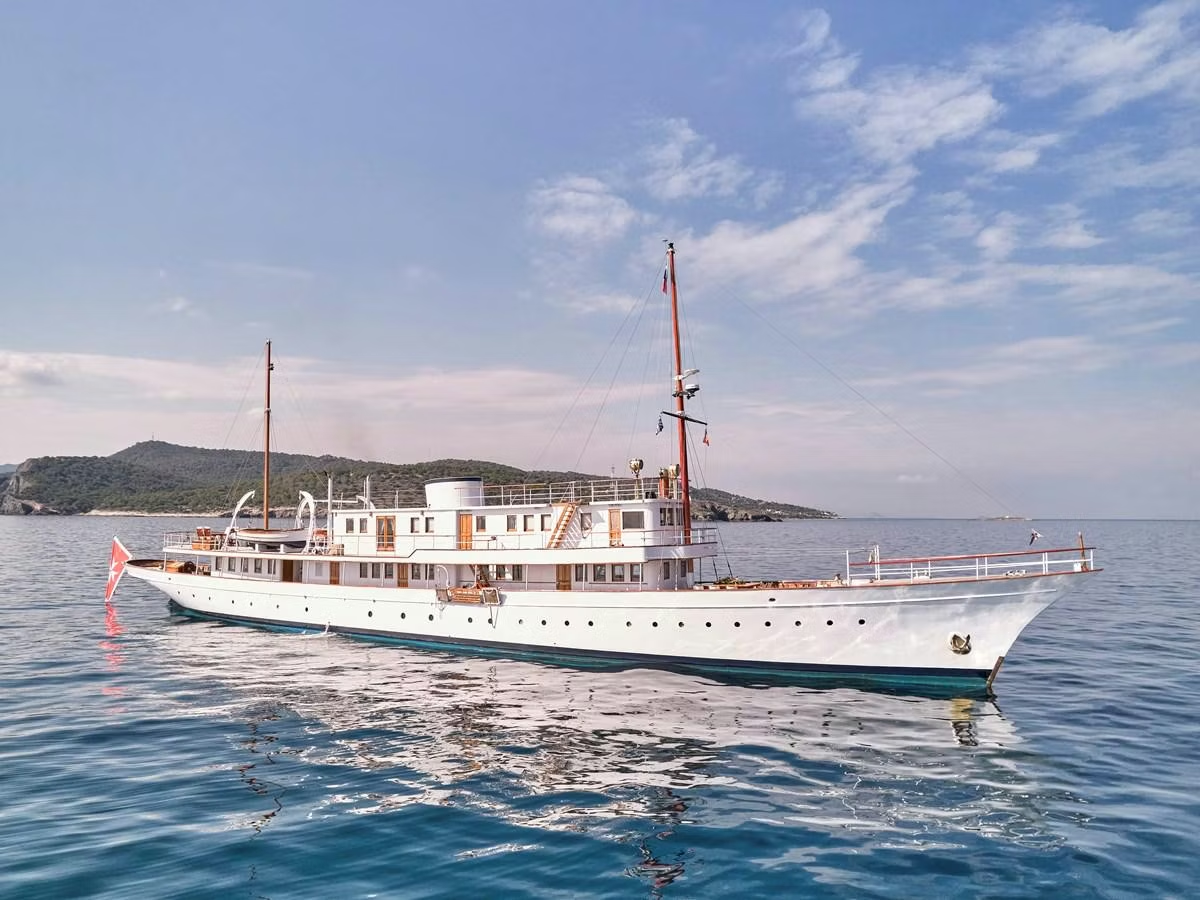

A recent report shows that affluent individuals are dramatically increasing how much they spend on vacations, fine dining and yachts, with luxury cruise and yachting expenditures rising notably in 2025 compared with 2024. In this environment of heightened experiential spending, UNICO Yachting is positioned at the intersection of ownership and charter demand, offering services across the full lifecycle of a yacht.
The global appetite for yachting - both ownership and charter - is part of a broader shift in how the wealthy allocate discretionary income. Spending on private jets and yachts grew meaningfully in recent years, reflecting a desire for experiences that blend privacy, luxury, and control over travel. This trend isn’t just a short-term spike; industry forecasts suggest the luxury yacht market is set to expand significantly over the next decade, with market valuations projected to nearly double from around $10–11 billion today to an estimated $17–19 billion by the early 2030s.
Yet the raw numbers only tell part of the story. What I’ve observed in conversations with industry professionals - and confirmed through market data - is that wealthy buyers increasingly value experience and personalization over specification lists. A yacht is no longer just a vessel; it’s a bespoke realm for curated travel, spontaneous adventure, and intimate gatherings with family or friends. This deeper emotional resonance with yachting helps explain why even as luxury goods markets may wobble, the segment tied to travel experiences continues to flourish.
View The Latest Yachts For Sale
Why the Yachting Sector Is Benefiting Now
1. Wealthy Buyers Prioritize Experience Over Possession
High-net-worth individuals (HNWIs) today are much less motivated by conspicuous accumulation and much more by unique, meaningful experiences. Rather than purchasing yachts as static status symbols, buyers want platforms for exploration - whether slow voyages through the Mediterranean or dynamic hops between Caribbean islands. This aligns with findings that affluent travellers are no longer satisfied with standard luxury travel alone, increasingly seeking highly personal, nuanced itineraries and lifestyle-driven journeys.
This resonates with my own conversations at industry events: seasoned yacht owners will explain that their emotional value comes not from owning a yacht in a registry, but from memories made on board - the sunrise breakfasts, the deep-sea fishing runs, and the unplanned stops only a private vessel allows.
2. Charter Demand Continues to Climb
The global yacht charter market is large and growing - valued at around $20 billion and expanding thanks to rising disposable incomes, luxury travel growth, and the appeal of private, customizable vacations. Charter’s strength lies in its accessibility. Many ultra-wealthy buyers will test the waters via charter before committing to ownership, while others choose charter indefinitely to avoid ownership responsibilities. In all cases, charter activity benefits from increased interest in experiential travel.
Moreover, charter demand is not monolithic. Seasonal patterns now reflect broader geographic interest: the Mediterranean remains a perennial favourite in summer, while the Caribbean dominates winter bookings. This geographical spread smooths demand cycles and creates year-round opportunities for charter operators.
3. Market Growth Supported by Demographic and Cultural Shifts
The yacht market’s projected growth is tied to both demographic expansion of UHNWIs (whose numbers have grown sharply) and cultural shifts in luxury consumption. Ultra-wealthy individuals now spend billions annually on luxury transport, including yachts and private jets, even as they reduce spending in certain traditional high-end goods categories.
Interestingly, the sustainability conversation is beginning to shape future yacht design. Hybrid-electric propulsion systems, advanced eco-friendly amenities, and alternative fuel research are gradually gaining traction, reflecting both regulatory pressures and buyer interest in greener experiences at sea.
Critical Operational and Regulatory Complexities
While the macro tailwinds for yachting are strong, the practical realities of ownership and charter management introduce layers of complexity that both buyers and sellers must navigate carefully:
Regulatory & Tax Nuances
Flagging decisions and VAT regimes can dramatically influence the cost and flexibility of yacht use, especially in popular cruising regions like the Mediterranean. Improper structuring can result in unnecessary tax liabilities or movement restrictions. Regional regulations differ substantially; understanding these before acquisition is essential.
Maintenance & Crew Costs
Annual operating costs for larger yachts - even those under charter - can easily exceed hundreds of thousands of dollars, factoring crew salaries, fuel, insurance, docking fees, and routine upkeep. These costs often surprise first-time owners but fundamentally drive long-term satisfaction and charter readiness.
From my perspective, the psychological hurdle here is underestimating the human element: a yacht is not a static investment but a living platform requiring ongoing stewardship. Choosing experienced teams for crew recruitment, compliance management and maintenance vastly improves both operational performance and charter marketability.
Market Risk and Valuation Insights
Yacht sales - especially in the superyacht segment - have experienced volatility. For instance, larger vessels saw sales dips in recent years due to geopolitical shifts and cost inflation pressures, highlighting that even high-net-worth segments are not immune to market headwinds. Sellers must price realistically, and buyers must assess not just purchase price but lifecycle costs.
View The Latest Yachts For Sale
Consumer Behaviour and Cultural Shifts Driving Growth
A Move Toward Deep Authenticity
Affluent travelers increasingly value authenticity: remote anchorages, cultural immersion, and personalized service trump uniform luxury. This is reshaping the kinds of yachts that sell and charter well. Expedition-style vessels - capable of blending comfort with off-the-beaten-path cruising - are gaining a following, even among buyers who previously favoured classic Mediterranean-style motor yachts.
In my observation, this reflects a broader cultural pivot among the wealthy: growth in creative and entrepreneurial circles has fostered a mindset where experiences matter more than possessions. Yachts that support exploration and experiential richness resonate more deeply than those that simply offer high-end finishes.
Rise of Alternative Ownership Models
Fractional ownership and membership platforms are also expanding the market’s reach, particularly among next-generation wealthy individuals who might prefer flexibility without the full burden of ownership. These models make yachting accessible to a wider group - bringing new participants into the ecosystem and diversifying charter and resale markets as well.
Financial Dynamics: Ownership vs Charter
Ownership as a Lifestyle Investment
For many HNWIs, yacht ownership is a lifestyle choice more than a financial investment. Depreciation and operating costs mean yachts rarely appreciate like traditional assets. However, owners derive value through utility and bespoke experiences - essentially buying time and space that no other asset can replicate.
From my conversations with owners, the emotional ROI - memories, family traditions, and shared exploration - often outweighs financial depreciation concerns. Yacht ownership changes how these individuals perceive travel and leisure.
Charter: Revenue, Flexibility, and Exposure
Charter enables owners to offset parts of the cost of ownership while keeping usage flexible. Seasonality and itinerary planning are critical here; vessels that align with high-demand windows and popular routes can perform strongly. Charter also introduces owners to potential future buyers, expanding the vessel’s network value.
The Future of Yachting: Trends to Watch
Sustainability Integration: Hybrid propulsion and environmentally sensitive design are gaining traction.
Tech-Enabled Experiences: Smart onboard systems and AI-driven personalization will deepen the experiential dimension.
Regulatory Evolution: VAT, emissions rules, and regional compliance shifts will continue shaping purchasing strategies.
Geographic Diversification: Emerging cruising hubs in Asia-Pacific and the Middle East will attract new charter and ownership interest.
Closing Perspective
The surge in wealthy spending on yachting reflects a larger shift toward experience-driven luxury travel, underpinned by solid market growth forecasts and evolving buyer preferences.
As the yachting ecosystem becomes more sophisticated, firms like UNICO Yachting can add real value by navigating complexities around ownership, charter and regulatory compliance while helping clients realise not just transactions but meaningful, memorable journeys.
In my view, this evolution is transforming yachts from static status symbols into dynamic platforms for life-enriching experiences - an opportunity for advisors who truly understand both the market and the motivations behind the money.