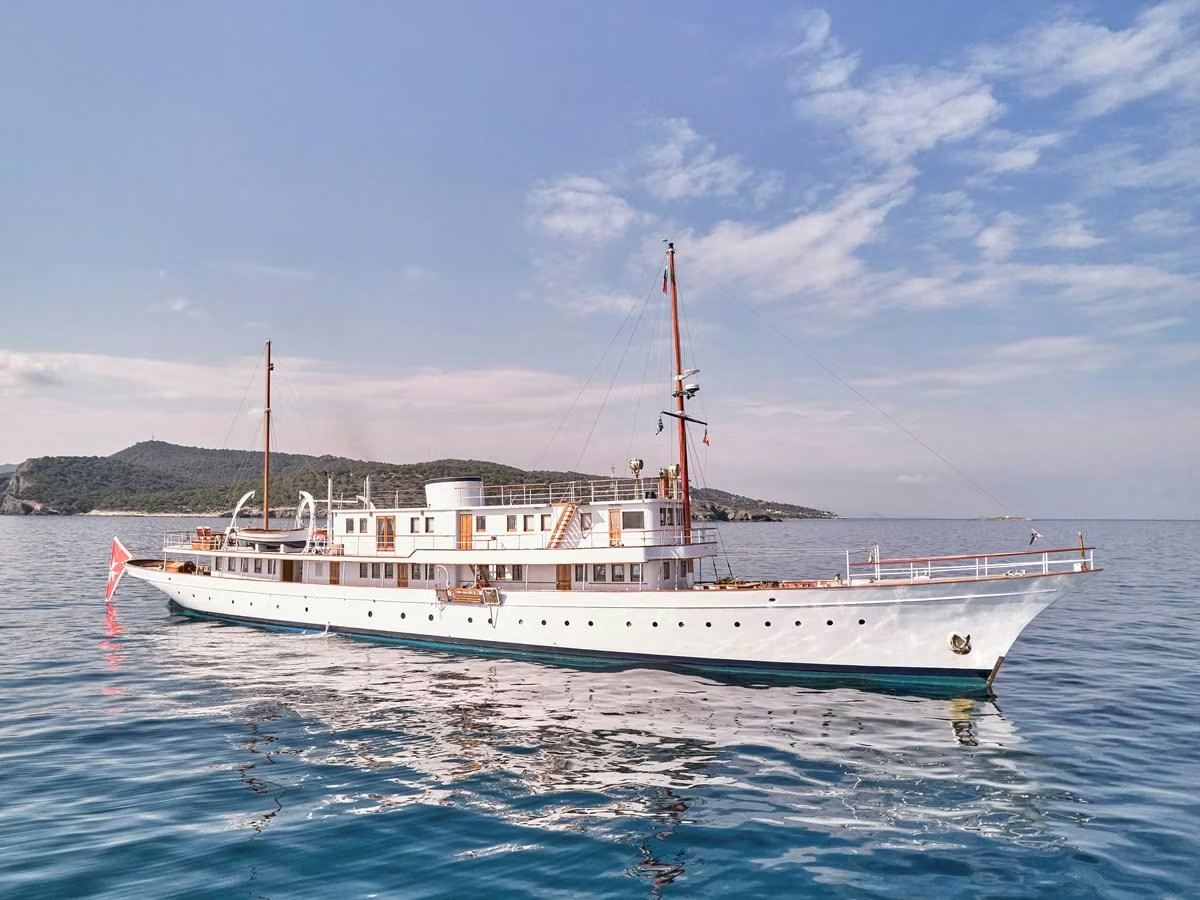

A sport bridge yacht - also referred to as a sportsbridge, sport-flybridge, or sport bridge motor yacht - occupies a distinct niche in the luxury yacht taxonomy: a high-performance, low-profile motor yacht category (e.g., Princess S80, 28.7 m sportbridge model) that integrates an elevated helm station with sports-oriented hull dynamics.
Unlike traditional cruisers, pilothouse yachts, or full flybridge vessels, the sport bridge strikes a calibrated balance between agile performance and strategic outdoor use of space.
This article delivers an in-depth exploration of sport bridge design, handling, deck ergonomics, owner psychology, and emerging environmental innovations to elevate understanding beyond generic explanations.
What Sets It Apart
A sport bridge yacht is structurally distinguished by a raised, open helm station positioned above the main deck - akin to a flybridge’s elevated control area - but with a sleeker, performance-oriented profile that borrows heavily from sports yacht design. The helm deck is often exposed (without a full hardtop), emphasising line of sight, situational awareness, and direct connection with sea conditions.
The design philosophy prioritises reduced top weight, aerodynamic shaping, and hydrodynamic responsiveness, placing sport bridge yachts in a hybrid class that thrives on both speed and visibility.
View The Latest Yachts For Sale
Key Characteristics
Typical metrics and features include:
Elevated helm station - open or bimini-covered upper control area for navigation and social interaction.
Sleek superstructure - streamlined design reducing drag and emphasising forward momentum.
Performance hulls - deep-V or modified geometry for efficient planing and handling at speed.
Integrated deck use - aft cockpit, sunpads, and social seating augment outdoor living space without sacrificing agility.
In contrast to full flybridge yachts, sportsbridge configurations often offer less deck volume but improved dynamics and visual continuity with the hull line, making them better suited to owners prioritising performance without entirely sacrificing social space.
Design and Naval Architecture
Hybrid Performance and Aesthetics
Designers of sport bridge motor yachts orchestrate a synthesis of performance attributes (e.g., lightweight composites, aerodynamic superstructures) with practical helm functionality. Weight reduction, often achieved through vacuum-infused composite construction and carbon reinforcement, supports higher speed while retaining structural integrity and stability.
This hybrid approach influences a wide range of engineering decisions, from engine placement and propulsion choice to superstructure height, all calibrated to minimise weight and wave resistance while retaining cockpit utility.
Hull and Materials
Sportbridge vessels frequently employ deep-V hull designs that excel in chop penetration and rapid transitions to planing mode, essential for achieving both agile acceleration and predictable high-speed handling. Lightweight composite materials - including glass, carbon, or hybrid laminates - contribute to fuel efficiency and reduced moments of inertia, allowing for tighter handling envelopes and confident helm control.
Elevated Helm Functionality
The helm deck in a sport bridge yacht is not merely a stylistic flourish but a functional vantage point. Elevated aft and forward visibility enhances docking precision, coastal navigation, and situational awareness when transiting crowded marinas or complex channels. The trade-off is exposure to weather and spray, making optional covers or Bimini tops common add-ons to balance environmental comfort with operational clarity.
On-Deck Layout and Features
Upper Deck Dynamics
The sportbridge mini-bridge serves as both a functional helm station and social platform. Featuring helm seats, companion seating, and limited entertainment amenities, this upper deck is smaller and more streamlined than a traditional flybridge yet offers 360° panoramic views and closer proximity to sea conditions.
Main Deck and Salon Integration
Sport bridge designs often pursue indoor–outdoor continuity, with fold-away glass doors and expansive sightlines linking the main salon with aft decks. These design choices foster a flow between interior comfort and exterior engagement, enhancing the cruising experience without overwhelming the yacht’s athletic profile.
Below Deck Comfort
Below decks, sportbridge yachts accommodate full-beam master cabins, guest berths, and crew quarters similar to sports or luxury motoryachts. Proper distribution of weight and internal volume supports both comfort and performance, aligning spatial ergonomics with the vessel’s sporty disposition.
View The Latest Yachts For Sale
Performance and Handling
Engine and Propulsion Choices
Sport bridge yachts integrate high-output marine diesel engines, often paired with surface drives or waterjet systems to deliver responsive throttle response and swift top-end speeds. The integration of advanced navigation electronics and efficient propulsion systems enhances the vessel’s ability to maintain planing efficiency and trim optimisation even in variable sea states.
Handling Characteristics
A sportbridge’s low center of gravity and optimized hull geometry promote crisp handling, quick course changes, and stable high-speed performance. Compared to flybridges, which prioritise social space and comfort, a sportsbridge’s trim hull and lower profiles help deliver a sport yacht-like responsiveness that seasoned skippers value during spirited cruising.
Fuel Efficiency and Range Considerations
While inherently performance-oriented, sportbridge yachts leverage hydrodynamic refinement and powertrain calibration to balance equal emphasis on fuel consumption and cruising range. Owners should consider engine tuning, weight distribution, and propeller design when planning extended coastal passages or offshore runs.
Sport Bridge vs Flybridge and Other Yacht Types
Direct Comparison Chart
Feature / Attribute | Sport Bridge Yacht | Flybridge Yacht | Sport Yacht |
Elevated Helm Visibility | ✔️ Elevated & open | ✔️ Higher & larger | ❌ (lower) |
Deck Space | 🟠 Moderate | 🟢 Extensive | 🔴 Limited |
Performance | 🟢 High | 🟡 Moderate | 🔴 High |
Social Lounge Areas | 🟠 Good | 🟢 Excellent | 🔴 Limited |
Aerodynamic Profile | 🟢 Sleek | 🔴 Bulkier | 🟢 Sleek |
View The Latest Yachts For Sale
Choosing the Right Yacht for Your Mission
Selecting between a sport bridge, flybridge, or express sport yacht depends on cruising goals, climate patterns, and lifestyle priorities. Sport bridge yachts suit owners seeking performance, visibility, and outdoor engagement without the spatial trade-offs of larger flybridge decks.
Flybridge yachts work best for extended social cruising and charter experiences, while sport yachts remain ideal for pure speed and sleek silhouette.
Yacht Builder Perspectives and Notable Models
Manufacturers such as Princess Yachts with the Princess S80 demonstrate how sportclassic aesthetics and multi-area deck utility can coexist on larger sportbridge platforms. For example, the S80 features expansive seating, wetbars, and even optional amenities like outdoor TVs and barbecues integrated into the bridge deck - blending performance lifestyle with usable outdoor living.
The Psychology of Sport Bridge Yacht Ownership
What Motivates Owners to Choose a Sportbridge
Owners drawn to sport bridge yachts often cite a desire for participatory navigation, direct engagement with marine environments, and a balance between performance adrenaline and luxury living. The elevated bridge station enhances situational awareness, while the sport-oriented hull and exercise of power appeal to those seeking an athletic cruising experience rather than passive observation.
Lifestyle Implications
The design orientation fosters a social dynamic where helm control and passenger interaction overlap. The elevated helm becomes a stage for shared experience, visibility, and navigation, transforming what could be a purely mechanical task into a socially integrated activity - a psychological draw particularly potent among experienced yachtspeople and repeat owners.
Sportbridge Yachts and Emerging Environmental Design Trends
Lightweight Construction and Emission Considerations
Globally, yachtbuilders are responding to maritime sustainability pressures by integrating lighter composite materials, hybrid propulsion, and reduced emissions into vessel design. Lightweight structures not only enhance performance but also reduce fuel burn and carbon footprint per nautical mile, aligning environmental considerations with performance goals.
Potential Green Upgrades
Innovations include hybrid diesel–electric powertrains, solar-assisted battery systems, and digital energy management to reduce auxiliary load and idling emissions - technologies that can be retrofitted to sportbridge architectures without sacrificing weight or handling.
Forecasting a “Green Sportbridge”
As yacht markets grow and environmental regulation tightens, eco-efficient sportbridge yachts - blending advanced propulsion, lightweight composites, and smart energy tech - may redefine expectations of both performance and sustainability in luxury yachting.
View The Latest Yachts For Sale
Maintenance, Ownership Costs, and Practical Tips
Cost Profile
Operating a sport bridge yacht entails not only initial acquisition costs (which can vary from mid-range to superyacht budgets) but also ongoing expenses such as dockage, fuel (particularly for high-speed cruising), insurance, and regular maintenance of propulsion and hull systems.
Care for Exterior and Bridge Components
Exposure of the elevated helm, open seating, and deck hardware to UV, salt spray, and vibration requires a structured care routine: regular cleaning, protective covers, and corrosion-resistant fixtures to ensure longevity.
Seasonal Usage and Storage Recommendations
Owners should plan seasonal care, including proper winterisation, hull protection, and system checks prior to peak cruising periods, to preserve both mechanical performance and aesthetics over time.
View The Latest Yachts For Sale
Sport Bridge Yachts FAQ’s
Is a sport bridge yacht suitable for long-distance ocean passages?
No — they are optimized for performance cruising and coastal passages, not extended transoceanic range.
Can a sport bridge yacht be a viable charter vessel?
Yes — if it meets commercial class standards and has appropriate cabin layout for guests.
Do sport bridge yachts require a professional crew?
Not always — but most owners prefer a skilled captain for performance cruising and safety.
Do sport bridge yachts perform differently in rough seas compared with flybridge yachts?
Yes — they generally offer sharper handling and less pitching due to lighter weight and performance hulls.
Are sport bridge helm stations always exposed to weather?
Typically yes — the bridge is open-air with optional shade solutions.
How does sport bridge design affect resale value?
Sport bridge yachts tend to hold value well if they balance performance with social space, attracting a niche market.
How do sport bridge yachts compare to pilothouse yachts in stability?
Pilothouse yachts typically offer more enclosed comfort and sea-state stability, while sport bridges favour agility.
What’s the typical “air draft” (height above water) for sportbridge designs?
Sportbridges have lower air draft than full flybridges to keep sleek profiles and bridge clearance.
Can sport bridge yachts use hybrid propulsion systems?
Yes — hybrid and eco-optimized powertrains are emerging trends for performance with better fuel economy.
How does fuel consumption of a sportbridge compare to a traditional cruiser?
Sportbridges typically consume more fuel at speed but can be more efficient than full flybridges at comparable performance levels.
Is maneuverability better on a sport bridge than on a flybridge in tight marinas?
Yes — lower center of gravity and performance hulls make sportbridges more responsive.
Are sport bridge yachts more expensive to insure than equivalent flybridges?
They can be — performance focus and higher speeds may raise premiums compared with standard cruisers.
How does social space on a sport bridge compare to an express cruiser?
Sport bridges generally offer more seating and elevated outdoor space than express cruisers without a bridge.
Do sport bridge yachts have better resale demand in certain regions?
Yes — they are especially popular in Mediterranean and tropical cruising grounds due to climate and cruising style.
What are best practices for visibility and situational awareness from the sport bridge helm?
Use 360º sightlines, radar integration, and AIS alerts for safety in crowded or restricted waters.