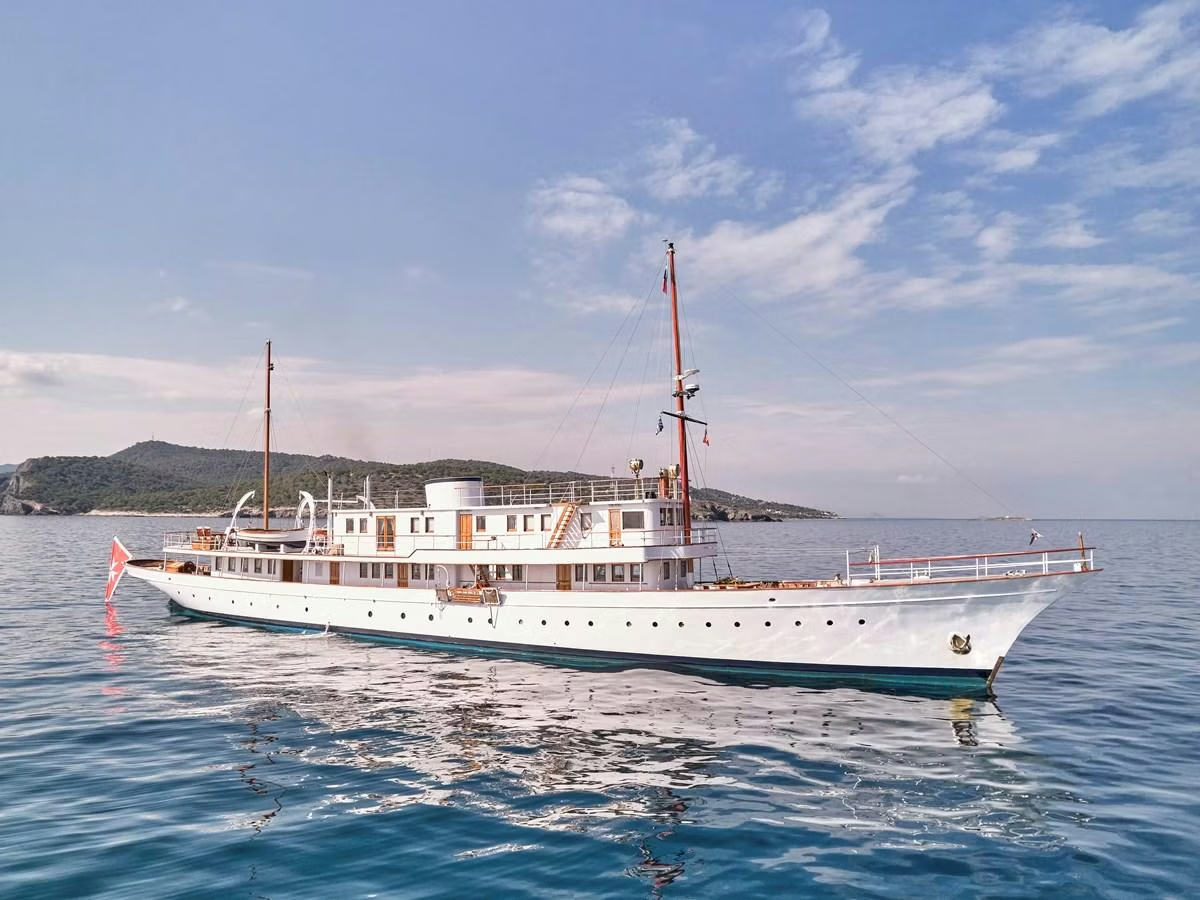
Southampton International Boat Show 2026 runs from 18 to 27 September at Mayflower Park, bringing the UK boating market together in one waterfront setting: sailing yachts, motor boats, RIBs, dayboats, superyachts, engines, electronics, marine equipment, watersports, live talks, family entertainment and on-water experiences. For visitors, the value of Southampton is practical. It is not only a place to see new boats, but a show where buyers can compare British and international brands, step aboard models in the marina, try boating and watersports, ask technical questions and understand how boat ownership works in real UK waters, from the Solent to the South Coast and beyond.
Latest Southampton International Boat Show 2026 Updates You Need to Know
1. The 2026 show returns for ten full days at Mayflower Park
Southampton International Boat Show 2026 takes place from Friday 18 to Sunday 27 September at Mayflower Park, Southampton. The show remains the UK’s flagship boating and watersports festival, with a format that works for serious buyers, families, trade visitors, first-time boaters and existing owners looking at upgrades.
The September timing matters. It comes after the main UK boating season, when owners know what worked, what failed and what needs changing before next year. A family may have discovered that a dayboat needs better shelter. A sailor may now understand why reefing setup matters. A motor boat owner may be thinking about range, servicing, fuel burn or winter storage. Dealers can also turn late-season interest into autumn and winter decisions.
Southampton is strongest when treated as a practical UK buying and ownership show, not only as a day out. The best conversations are about real use: Solent chop, tidal passages, cockpit protection, heating, storage, servicing, training and whether the boat still makes sense once summer weather disappears.
2. The marina remains the serious buyer’s starting point
The Show Marina is where serious visitors should begin. More than 250 boats are expected on the water, covering sailing yachts, motor boats, RIBs, dayboats, larger yachts and high-performance craft. Full marina access is included with standard entry, which makes Southampton especially useful for hands-on comparison.
In-water viewing is different from looking at brochures or indoor displays. Boarding access, cockpit height, helm visibility, storage, cabin proportions, side-deck movement and engine access are all easier to judge when the boat is sitting in the marina. A family boat that looks spacious online may feel awkward when four people try to move around the cockpit. A sailing yacht with a smart interior may still have poor protection at the helm. A RIB that looks fast may not feel safe or dry enough for regular Solent use.
For buyers comparing yachts for sale, Southampton helps connect desire with practical use.
3. On-water activities make Southampton more hands-on than many shows
Southampton’s on-water activities give the show a different character from many premium yacht events. Visitors can try boating and watersports rather than only look at boats from the dock. Try-a-Boat, paddleboarding, kayaking, diving and accessible powerboating all help new visitors understand what time on the water actually feels like.
This matters because many people enter boating through experience, not specification. A first-time visitor may not know whether they prefer sailing, RIBs, paddleboarding, cruising or simply being around boats. A family may want to know whether children enjoy being on the water before committing to a purchase. A new boater may need confidence before speaking to dealers.
Southampton’s best feature is that visitors can move from looking at boats to trying life on the water in the same day. That makes the show more useful for education and confidence-building than a purely display-led event.
4. The Shipyard gives the show a stronger festival feel
The Shipyard adds music, food, drink and atmosphere to the show. In 2026, it stays open late on Fridays and Saturdays until 9pm, giving visitors more time to enjoy the event after the main day of walking stands, viewing boats and attending activities.
This is important because Southampton has to work for more than serious buyers. It needs to serve families, casual visitors, younger boaters, exhibitors and people arriving after work. The Shipyard makes the show feel less transactional and more like a waterfront festival. It is also a useful place to pause between appointments, meet friends, stay into the evening or make the day feel less rushed.
For exhibitors and buyers, the later atmosphere can also help softer conversations happen away from the sales stand.
5. Wooden boats, careers and marine skills add a deeper UK industry angle
Southampton is not only a retail boat show. The Wooden Boat Stage, Wooden Boat Stage Afloat, Women in Marine activity and Apprentice of the Year recognition bring a deeper industry story into the event.
That matters because the UK marine sector depends on people as much as products: boatbuilders, engineers, electricians, designers, surveyors, marina staff, brokers, sailmakers, technicians and apprentices. Wooden boatbuilding also brings craftsmanship and heritage into a show increasingly shaped by electronics, electric craft and modern materials.
The strongest version of Southampton is not just a marina full of boats. It is a snapshot of the UK marine industry: practical ownership, family access, skills, future careers, craftsmanship and the next generation of boaters.
Southampton International Boat Show 2026 Quick Facts
Dates: Friday 18 to Sunday 27 September 2026
Location: Mayflower Park, Southampton
Postcode: SO14 2AS
Edition: 57th Southampton International Boat Show
Opening: daily from 10am
Main focus:
Sailing yachts
Motor boats
RIBs
Dayboats
Superyachts
Electric craft
High-performance yachts
Engines
Electronics
Marine equipment
Watersports
Try-a-Boat
Paddleboarding
Kayaking
Diving
Live music
Talks and stages
Best day for serious buyers: Friday or weekday mornings
Best day for families: weekends, but arrive early
Best day for atmosphere: Friday or Saturday evening
Closest mainline station: Southampton Central
Venue note: waterfront show, so deck-friendly shoes and weather planning matter.
How Southampton Differs from Cannes, Monaco, Genoa, Miami, Palma and boot Düsseldorf
Southampton is the practical UK boating show
Cannes is Mediterranean launch-focused. Monaco is built around superyachts and private clients. Genoa is Italian, technical and industry-led. Miami is American, performance-led and lifestyle-driven. Palma is seasonal, charter and refit-led. boot Düsseldorf is broad, indoor and research-heavy.
Southampton is different because it is rooted in the UK market. It is closely connected to the Solent, one of Britain’s most active boating areas, and it speaks directly to how UK owners use boats: tidal cruising, weekend sailing, South Coast passages, winter maintenance, mixed weather, family days, club boating, berthing, training and realistic ownership costs.
It is also more open than many premium yacht shows. A visitor can arrive as a serious buyer, a first-time boater, a family, a watersports fan or a trade guest and still find a clear route through the event.
Southampton is useful for real UK boating conditions
UK buyers need to think differently from Mediterranean buyers. Weather protection, heating, cockpit shelter, safety, storage, maintenance access, wet-weather clothing, tides, berthing, winterisation and resale all matter.
At Southampton, the best boat is not the one that looks most glamorous at the dock; it is the one that still makes sense in the Solent in October. A cockpit that works on a calm September afternoon may feel different in rain. A helm that looks clean may lack protection. A cabin that feels compact in the sunshine may become important during longer passages.
That is why visitors should ask about yacht care, service intervals, winter works, engine access, running costs and survey findings before thinking only about finishes and optional extras.
Southampton is more open and accessible than many premium yacht shows
Southampton’s accessibility is one of its strengths. Try-a-Boat, paddleboarding, kayaking, diving and accessible powerboating reduce the barrier to entry. The show is not reserved for buyers already deep inside the yachting world.
For new boaters, this is important. A first purchase can feel intimidating because ownership involves training, storage, servicing, insurance, safety equipment and local knowledge. Southampton gives visitors a more forgiving route into the market: try the water, compare boat types, attend talks, ask beginner questions and then move towards brands and dealers with more confidence.
How the Southampton Boat Show Layout Works
Mayflower Park: the main show environment
Mayflower Park is the core of the show. It brings together the marina, stands, show zones, food, retail, live music and activity areas in one waterfront setting. That makes it easier to navigate than a multi-site city show, but visitors still need a plan.
Southampton is easiest when you walk it by intent. A serious buyer should start with the Show Marina. A first-time visitor may begin with on-water activities or talks. Families should plan around activities, food and breaks. Existing owners should build time for equipment, electronics and technical stands rather than spending the entire day on boats.
The mistake is treating the show as one long wander. It is more useful when visitors decide what the day is for: buying, learning, trying, comparing, networking or simply enjoying the festival atmosphere.
Show Marina: best for serious boat comparison
The Show Marina is the most valuable area for buyers. It allows visitors to step aboard boats, compare layouts and understand how different models feel in the water. This is where a yacht buying guide becomes practical rather than theoretical.
Visitors should compare boarding, helm layout, cockpit protection, storage, cabin volume, deck safety, engine access and family usability. On sailing yachts, look at reefing, side decks, cockpit shelter and short-handed handling. On motor boats and RIBs, look at seating, dry storage, visibility, engine packages and how easy the boat would be to manage in wind or chop.
A boat that impresses at first glance may not survive a second inspection. Revisit serious options later in the day if possible.
New Wave Hall and retail areas: best for equipment, clothing and marine products
New Wave Hall and the retail areas are important because ownership is never only about the boat. Clothing, electronics, chandlery, safety gear, watersports kit, navigation products and technical accessories all shape the boating experience.
Existing owners should use this area to research upgrades, replace kit and compare suppliers. New boaters should use it to understand what ownership requires beyond the purchase price. Safety equipment, waterproof layers, lifejackets, navigation tools, fenders, lines, charging equipment and communication systems can be as important as optional upholstery.
A good Southampton visit should include equipment research, not only boat viewing.
On-water activity areas: best for first-time boaters and families
The on-water activity areas are among the most useful parts of the show for families and newcomers. Try-a-Boat, paddleboarding, kayaking, the dive tank and accessible boating experiences help visitors engage with the water rather than only inspect products.
This is especially helpful for children, first-time boaters and people still deciding whether boating is right for them. A hands-on activity can answer questions that a sales brochure cannot: Do you enjoy being on the water? Do you prefer speed or quiet? Are you more interested in sailing, paddling, diving or motor boating? Does the family enjoy it together?
For many visitors, this is the real starting point.
The Shipyard and stages: best for atmosphere, talks and end-of-day energy
The Shipyard, stages and talks give the show its festival feel. Live music, food, drink, expert sessions, interviews, wooden boat content and interactive features all help the day feel less like a trade fair.
This part of the show is especially useful after serious appointments. Visitors can slow down, process what they have seen, meet others and stay into the evening on Fridays and Saturdays. It also gives families a reason to spend longer at the show without making the entire day about walking pontoons.
What to See at Southampton International Boat Show 2026 by Visitor Type
1. For serious boat buyers
Start with the Show Marina.
Compare boats by intended use, not only length.
Ask about delivery, availability and show offers.
Check cockpit protection, heating, storage and engine access.
Ask about Solent, Channel and South Coast suitability.
Compare new models with pre-owned options.
Revisit your shortlist later in the day.
Serious buyers should treat Southampton as a practical decision-making event. A dealer may focus on finish, specification and show offers, but the buyer should focus on usability, support, maintenance and resale. If you are comparing new and pre-owned choices, the question is not simply which boat looks newer. It is which boat better suits your timing, budget, use and risk tolerance.
For higher-value purchases, a yacht broker can help compare options more objectively, especially when weighing a new model against used vs new yachts.
2. For sailing yacht buyers
Sailing yacht buyers should focus on practical handling. Look at deck ergonomics, cockpit protection, reefing systems, sail handling, visibility, storage and short-handed setup. UK sailing often involves tide, weather changes, cooler evenings and passages where protection matters.
Ask whether the yacht can be managed by the normal crew, not an idealised racing team. How easy is reefing from the cockpit? Is the cockpit safe in poor weather? Is heating standard or optional? Is there enough storage for longer passages? What support exists on the South Coast?
Interior comfort matters, but in the UK, the boat must also feel safe, dry and manageable outside.
3. For motor boat and RIB buyers
Motor boat and RIB buyers should compare hull design, outboard or inboard options, fuel burn, range, seating, storage, family safety, wet-weather protection and trailerability. A Solent RIB or dayboat should be judged by safety, handling and comfort under real weekend load.
Ask how the boat handles chop, how dry the ride is, whether the cockpit gives enough protection, and whether there is proper storage for bags, safety kit, lines and wet clothing. Range also matters. A boat that works for short harbour trips may not be suitable for longer coastal runs.
The best choice is rarely the most aggressive-looking boat. It is the one that keeps people safe, comfortable and confident.
4. For first-time boaters
Try an on-water activity.
Attend talks or demonstrations.
Compare boat types before brands.
Ask about training, berthing, insurance and maintenance.
Avoid making a decision based only on lifestyle appeal.
Think about where and how often you will actually use the boat.
First-time buyers should slow down. The right boat depends on intended use: family weekends, fishing, sailing, watersports, club cruising, marina hopping, trailer boating or longer coastal passages. Southampton is useful because it lets newcomers compare experiences before committing too early.
The best first purchase is usually the boat that will be used often, serviced easily and handled confidently, not the boat that seems most exciting on day one.
5. For families
Families should prioritise on-water activities, The Shipyard, food areas, live music and interactive features. A good family visit needs breaks, not only boats. Arrive early, book or prioritise activities, bring waterproof layers and avoid overloading the day with too many appointments.
Southampton works well for families because it does not require everyone to have the same level of boating knowledge. Children can try activities. Adults can compare boats. The group can use food and music areas to reset.
For families thinking about ownership, this is also a useful test. If children enjoy being around the water, stepping aboard boats and trying activities, the conversation about buying becomes more grounded.
6. For technical visitors and existing owners
Technical visitors and existing owners should give proper time to engines, electronics, safety equipment, clothing, communications, maintenance products and accessories. Ask whether systems can be retrofitted, who stocks parts, what warranties apply and whether equipment is suitable for saltwater and winter use.
Existing owners often gain more value from Southampton than they expect. A better communication system, improved safety setup, efficient engine service plan or upgraded navigation package can change the boating experience more than a cosmetic change. For technical planning, topics such as advanced yacht communication systems, yacht support and yacht running costs should be part of the visit.
7. For trade visitors and marine careers
Trade visitors should look beyond products and pay attention to market signals: electric craft, RIBs, dayboats, family cruisers, accessible boating, skills, training and retail activity. Southampton is a useful window into what UK buyers are asking for now.
For students, apprentices and young professionals, careers activity matters. Women in Marine, Apprentice of the Year, skills sessions and wooden boat features show that the industry needs people across many pathways: engineering, boatbuilding, surveying, sales, marketing, events, design, marina operations and technical services.
Suggested One-Day and Two-Day Southampton Boat Show Itineraries
One-day itinerary for leisure visitors
10:00 — Arrive early at Mayflower Park.
10:30 — Walk the Show Marina and main boat displays.
12:00 — Visit New Wave Hall or retail and equipment areas.
13:00 — Lunch at The Shipyard or nearby city centre/Oxford Street.
14:00 — Try-a-Boat, paddleboarding, kayaking or the dive tank.
15:30 — Visit talks, stages or wooden boat displays.
17:00 — Revisit favourite boats or stands.
Evening — Stay for live music or head to Ocean Village, Oxford Street or the old town.
A one-day visit should have a clear priority. If the aim is family fun, build around activities. If the aim is buying, start with the marina. If the aim is learning, include talks and equipment areas.
Two-day itinerary for serious buyers
Day 1: boat viewings, dealer conversations and first shortlist.
Day 2: second viewings, technical questions, finance, surveys and ownership planning.
Keep one session for engines, electronics and equipment.
Do not book activity sessions during key yacht appointments.
Revisit boats in different weather or crowd conditions.
Use Southampton’s marina setting to test practical access and flow.
A second viewing is often where the better decision emerges. The first viewing shows what appeals. The second reveals compromises: tight storage, exposed helm positions, awkward engine access, weak protection or unrealistic delivery assumptions.
Trade visitor itinerary
Trade visitors should use quieter weekday mornings for serious conversations with suppliers, dealers and partners. Afternoons can be used for broader market observation, talks and networking.
For follow-up conversations, evening hospitality or nearby restaurants often work better than trying to finish every discussion on a busy stand. Southampton is compact enough to combine the show with city-centre dinners, but planning still matters during peak days.
Where to Stay for Southampton International Boat Show
Best area for convenience: Mayflower Park / Old Town / WestQuay
Staying near Mayflower Park, the old town or WestQuay is best for convenience. This area keeps visitors close to the show entrance, restaurants, shopping and city-centre services. It works well for buyers, exhibitors and visitors attending multiple days.
The main advantage is time. Walking access reduces reliance on taxis and makes early appointments easier. The drawback is demand: central rooms can become expensive or limited during show week.
Best area for marina atmosphere: Ocean Village
Ocean Village suits visitors who want a stronger marina feel after the show. It offers waterfront hotels, restaurants, bars and a yachting atmosphere that continues beyond Mayflower Park.
This area works well for buyers, brokers and visitors who want the trip to feel connected to the water. It is not as immediately close as the old town, but it offers stronger lifestyle appeal.
Best area for restaurants and evening meetings: Oxford Street
Oxford Street is useful for client dinners and relaxed evening meals. It has a good concentration of restaurants and sits close enough to the waterfront and city centre to work well after the show.
For trade visitors and buyers, this area can be a practical evening base. It allows proper conversations away from the noise of the show without requiring complicated travel.
Best area for transport: Southampton Central / city centre
Southampton Central and the city centre are practical for visitors arriving by train. This area gives access to hotels, WestQuay, onward travel and public transport towards the waterfront.
It is less scenic than Ocean Village but efficient. For visitors not driving, this can be the easiest base.
Best alternatives outside Southampton
Winchester, the New Forest, Hamble and Lymington can all work for visitors extending the trip. Winchester offers historic city atmosphere. The New Forest gives countryside and boutique stays. Hamble and Lymington offer stronger sailing culture.
These options are best if transport is planned and the show schedule is not too packed. For daily attendance with early appointments, central Southampton is usually better.
Before booking, check:
Walking distance to Mayflower Park
Parking if driving
Train access
Breakfast hours
Cancellation terms
Distance from your first appointment
Whether you will attend one day or several days
Where to Eat During Southampton Boat Show
Best food strategy during show hours
During show hours, keep lunch practical. The Shipyard works well for food, drink and festival atmosphere, especially if you want to stay inside the event and avoid breaking the day.
If you have boat viewings, talks or on-water activities, avoid long lunches. Use dinner for client meetings and longer conversations. A rushed lunch is better than missing a yacht viewing or activity slot.
What to eat and drink in Southampton
Southampton’s dining is practical rather than showy, which suits the event. Visitors can choose between quick food inside the show, city-centre restaurants, pubs, marina-side dining and more polished evening options.
Best off-site dining by intent
For client dinners, Oxford Street and Ocean Village are the strongest areas. For marina atmosphere, Ocean Village works well. For casual post-show food, WestQuay, the old town and the city centre are convenient. For pubs and local atmosphere, the old town and nearby city pubs are good options.
For a more polished evening, look around the Southampton Harbour Hotel area or boutique hotel restaurants. For quick lunches, the show food areas or cafés near WestQuay are more practical than a formal booking.
Booking advice
Book dinner ahead during show week.
Keep dinner near your hotel or final show location.
Avoid tight reservations immediately after closing.
Check walking routes from Mayflower Park.
For groups, confirm deposit and seating.
Use lunch for efficiency and dinner for longer conversations.
What to Do in Southampton Outside the Boat Show
Walk the old town and medieval walls
Southampton’s old town and medieval walls are a useful low-effort activity after the show. They give the city historic context and work especially well for visitors staying near Mayflower Park or WestQuay.
This is a simple way to add something local without losing an entire day to sightseeing.
Visit SeaCity Museum
SeaCity Museum is a strong fit for boat-show visitors because of Southampton’s maritime history and Titanic connection. It is also a useful option if the weather turns or if visitors are staying extra time.
For families, it can balance a show day with a more structured indoor visit.
Explore Ocean Village
Ocean Village gives visitors a waterfront setting with restaurants, marina views and post-show atmosphere. It is especially relevant for yachting visitors because it keeps the evening connected to the water.
This is one of the easiest dinner or drinks choices after the show.
Visit Tudor House and Garden
Tudor House and Garden gives a compact cultural stop in old Southampton. It works well for visitors who want a short historic visit rather than a full-day excursion.
It is close enough to the city centre to combine with a meal or short walk.
Add a Solent or New Forest extension
If staying longer, consider Hamble, Lymington, Cowes or the New Forest. Hamble and Lymington are especially relevant for sailing visitors. Cowes adds Isle of Wight boating culture. The New Forest offers countryside and slower travel after a busy show day.
Do not force this into a single show day. It works best as an extension before or after the main visit.
How to Get There and Around During Southampton Boat Show 2026
By train
Southampton Central is the closest mainline railway station. Visitors can walk from the station or use local transport towards Town Quay, WestQuay and the waterfront.
Train travel is a good option for visitors coming from London, Portsmouth, Bournemouth or the wider South Coast. It can also reduce parking stress during the busiest show days.
By car
Driving can work, but parking needs planning. Show traffic and city-centre congestion can affect arrival, especially on weekends and around opening times.
Check official parking and transport information before travelling. If carrying equipment or travelling as a group, a car may be useful. For a simple leisure visit, train and walking may be easier.
By ferry
Southampton has strong regional maritime connections, and ferry travel may be useful for some Isle of Wight or Solent visitors depending on route.
If travelling by ferry, build in extra time. It is still worth treating the day like a major event rather than a normal trip into town.
By air
Southampton Airport is useful for domestic and some European connections. Heathrow and Gatwick may also work for international visitors with onward rail or road transfer.
Allow transfer time, especially if arriving on a show day with appointments already booked.
Getting around the show and city
Walk if staying centrally.
Use public transport from Southampton Central.
Plan activity slots in advance.
Wear comfortable deck-friendly shoes.
Bring waterproof layers.
Keep show map and tickets accessible.
Avoid overloading the day with both boat appointments and watersports.
Expert Buying Questions to Ask at Southampton International Boat Show
Questions for sailing yacht dealers
Can the yacht be sailed comfortably short-handed?
How does the cockpit work in rain or colder conditions?
What reefing setup is standard?
Is heating included or optional?
What storage is available for longer passages?
What service support exists on the South Coast?
How does the yacht perform in tidal waters?
Sailing yacht buyers should also ask about maintenance history and inspection requirements if looking at pre-owned examples. A proper yacht survey is not a formality; it is one of the main protections against hidden cost.
Questions for motor boat and RIB dealers
What is the realistic fuel burn at cruising speed?
How does the boat handle Solent chop?
Which engine package is best for range and reliability?
Is there enough dry storage?
What protection does the cockpit offer?
Can the boat be trailed or stored ashore?
Who handles servicing locally?
Motor boat buyers should be especially careful about comfort under load. Ask how the boat performs with family, fuel, safety kit, bags and real weekend use.
Questions for technical suppliers
Can the system be retrofitted?
What maintenance does it need?
Who stocks parts in the UK?
Does it integrate with existing electronics?
What warranty applies?
Is it suitable for saltwater and winter use?
Technical suppliers should be able to explain not only how the product works, but how it is installed, serviced and supported. If the product cannot be maintained locally, its value may fall quickly.
Expert opinion
Southampton is one of the best shows for asking practical ownership questions because UK boating quickly exposes weak storage, poor weather protection, awkward servicing and unrealistic running-cost assumptions. A boat that works in the UK has to be more than attractive. It has to be usable, serviceable and safe in changing conditions.
Sustainability, Electric Craft, Skills and the Future of UK Boating
Why sustainability matters at Southampton
Sustainability matters at Southampton because UK boating increasingly has to address emissions, fuel use, marina operations, antifouling, waste, noise and responsible access to waterways. Electric craft and eco-forward boats are part of the 2026 conversation, but the strongest sustainability story is practical.
A cleaner system is useful if it reduces emissions, maintenance, noise, discharge or fuel burn. A sustainable material matters if it lasts, can be maintained and performs properly in real conditions. A marina service matters if it helps owners reduce waste or operate more responsibly.
What visitors should look for
Electric propulsion
Efficient outboards
Lower fuel burn
Cleaner antifouling
Better battery management
Sustainable materials
Responsible marina services
Waste reduction
Quieter operation
Retrofit-friendly systems
The best question is not whether a product is marketed as green. It is whether it improves the boating experience while reducing impact.
Why skills and careers matter
The future of UK boating depends on skills as much as launches. Women in Marine, Apprentice of the Year, school activity, careers sessions and wooden boat craftsmanship all show the people behind the industry.
New boats still need builders, engineers, electricians, designers, brokers, surveyors, technicians, crew, marina professionals and service teams. A strong boat show should show the next generation where those careers begin.
Southampton International Boat Show 2026 FAQs
When is Southampton International Boat Show 2026?
Southampton International Boat Show 2026 takes place from Friday 18 September to Sunday 27 September 2026.
Where is Southampton International Boat Show held?
The show is held at Mayflower Park, Southampton. The show postcode is SO14 2AS.
What time does the show open?
The show opens daily from 10am. Visitors should check the official site before travelling for final daily opening and closing times, especially for late-opening Shipyard sessions.
What types of boats are shown?
The show includes sailing yachts, motor boats, RIBs, dayboats, superyachts, high-performance craft, electric boats, marine equipment and watersports products.
Is Southampton Boat Show good for buyers?
Yes. Southampton is especially useful for UK-based buyers comparing boats in a practical marina setting and asking about Solent, South Coast and UK ownership conditions.
Can visitors try boats?
Yes. Try-a-Boat, paddleboarding, kayaking, diving and other on-water activities are part of the show, subject to availability.
Is the show suitable for families?
Yes. The show includes family entertainment, on-water activities, live music, food areas and accessible boating experiences.
What is the best day to visit?
Weekdays are better for buyers and trade visitors who want quieter conversations. Weekends are better for families and atmosphere, but they are likely to be busier. Friday and Saturday evenings are best for The Shipyard.
Where should I stay?
Stay near Mayflower Park, the old town or WestQuay for convenience. Choose Ocean Village for marina atmosphere, Oxford Street for restaurants, and Southampton Central for transport.
What should I do after the show?
Walk the old town and medieval walls, visit SeaCity Museum, go to Ocean Village, see Tudor House and Garden, or extend the trip to Hamble, Lymington, Cowes or the New Forest.
Final Practical Visitor Checklist
Check official tickets and opening times before travelling.
Book hotel early.
Stay central if attending multiple days.
Start with the Show Marina if buying.
Pre-book or prioritise on-water activities.
Wear deck-friendly shoes.
Bring waterproof layers.
Group appointments by show area.
Leave time for New Wave Hall and technical suppliers.
Use Southampton Central as the main rail reference.
Book dinner ahead.
Keep one flexible hour for unexpected boats, talks or activities.