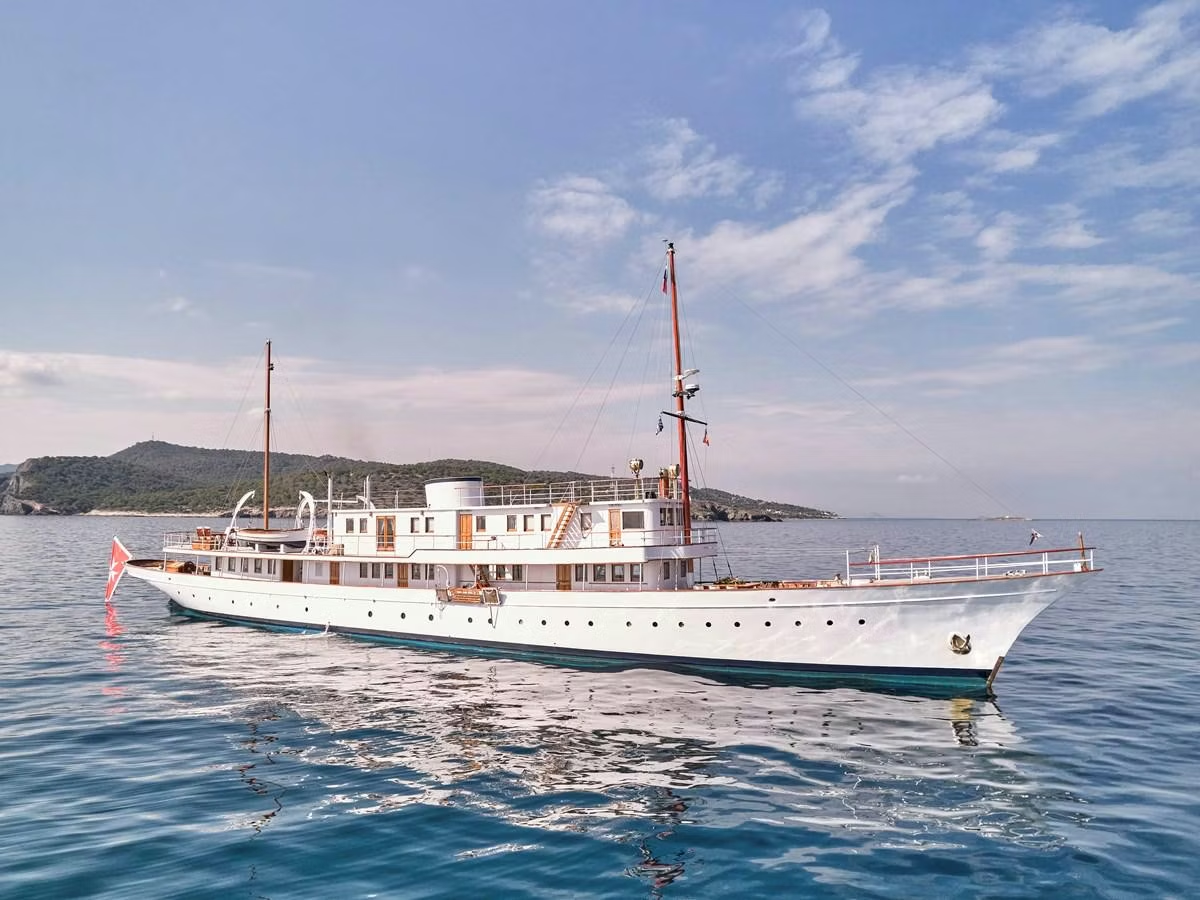
Palma International Boat Show 2026 ran from 29 April to 2 May at Moll Vell in Palma de Mallorca, bringing the Mediterranean yachting season into focus with yachts, superyachts, sailing boats, motor yachts, brokerage vessels, new-build concepts, refit specialists, shipyards, equipment suppliers, tenders, water toys and marine services. For visitors, the value of Palma is practical and seasonal. It is not only a place to see yachts in a beautiful harbour setting, but a show where buyers, owners, captains, brokers and charter clients can understand what is ready for the summer season, which yachts are available, which refit and repair specialists matter, and how Mallorca’s yachting ecosystem supports ownership long after the show closes.
Latest Palma International Boat Show 2026 Updates You Need to Know
1. Palma confirmed its role as the Mediterranean season opener
Palma International Boat Show 2026 took place from 29 April to 2 May at Moll Vell, in the Port of Palma. Its timing is one of the reasons the show matters. It sits just before the main Mediterranean season, when yachts are being prepared, charter calendars are filling, captains are finalising works and buyers are still able to inspect vessels before summer pressure begins.
That makes Palma different from late-season shows. Cannes and Monaco help the market read the next cycle after summer. Palma helps the market prepare for the season ahead. Buyers can compare yachts before peak cruising months. Charter clients can assess guest layouts, toy inventories and crew suitability. Owners can speak to service providers before berths, yards and specialist technicians become harder to secure.
The value of Palma is that it connects buying, charter, refit and servicing at exactly the right point in the calendar.
2. Superyacht Village remained the serious buyer and charter hub
The Superyacht Village is one of the most important parts of the show because it focuses on yachts over 24 metres available for sale and charter. It brings together brokerage houses, charter professionals, owners’ representatives, captains and service providers in a setting that is less formal than Monaco but still commercially serious.
For buyers, this is where conversations move beyond first impressions. A yacht may look ready for summer, but the more useful questions concern ownership history, refit work, survey records, charter commitments, crew continuity, flag, tax, berth options and ongoing support. This is where a strong yacht broker can help turn a dockside viewing into a structured buying process.
For charter clients, the Superyacht Village is equally valuable. It allows visitors to compare yachts by guest flow, crew style, toy inventory and cruising suitability rather than judging purely by length or photography.
3. The Superyacht New Build Hub gave Palma a stronger future-facing angle
The Superyacht New Build Hub added a more strategic dimension to Palma. Located at Marina Port de Mallorca, it focuses on new-build superyachts, shipyards, naval architects, designers, sustainable propulsion, advanced build technology and bespoke interiors.
This matters because Palma is often associated with yachts already operating in the Mediterranean. The New Build Hub expands that role by giving owners, family offices and advisers a place to explore future projects rather than only existing yachts. A new-build conversation is not simply about length, layout or interior style. It is about build slots, technical risk, operational profile, propulsion, crew flow, maintenance planning, resale and lifecycle support.
For serious owners, this section helps Palma move beyond “what is available now?” and into “what should the next yacht be?”
4. Refit, repair and lifecycle support are central to Palma’s identity
Palma is one of the Mediterranean’s strongest service and refit hubs. The show reflects that through its Refit & Repair and Shipyards & Equipment areas, where owners, captains and managers can speak to specialists before the summer season begins.
This is a major reason to attend Palma even if you are not buying. Yachts need maintenance, engineering support, rig work, paint, coatings, electronics, watermakers, safety systems, communications, stabilisation, interior upgrades and crew services. These decisions affect whether a yacht feels ready, reliable and commercially usable.
For owners comparing future costs, this is where topics such as yacht care, yacht surveys, maintenance planning and yacht running costs become more than abstract figures. They become conversations with the people who will keep the yacht operating.
5. Palma’s sustainability story is increasingly operational
Sustainability at Palma is most convincing when it is linked to ownership reality. The show’s sustainability activity, waste separation, carbon measurement, electric propulsion focus and support for sustainable materials all matter, but visitors should judge these themes by practical outcomes.
The most relevant sustainability questions in Palma are operational: does the solution reduce fuel use, improve energy management, extend equipment life, cut waste, reduce noise, support refit decisions or make the yacht easier to maintain? Sustainable materials, propulsion systems and marina practices are valuable when they survive contact with the yacht’s actual lifecycle.
For Palma, sustainability is not only about what appears on a stand. It is about what changes before, during and after the Mediterranean season.
Palma International Boat Show 2026 Quick Facts
Dates: Wednesday 29 April to Saturday 2 May 2026
Location: Moll Vell, Port of Palma, Palma de Mallorca
Opening hours: 10am–8pm daily
Main areas:
Superyacht Village
Superyacht New Build Hub
Shipyards & Equipment
Superyacht Square
Refit & Repair Zone
Main focus:
Best day for serious buyers: Wednesday or Thursday
Best day for leisure visitors: Friday or Saturday
Venue note: walkable harbour setting, but appointments and heat still require planning.
How Palma Differs from Cannes, Monaco, Genoa, Miami and boot Düsseldorf
Palma is the Mediterranean season opener
Palma’s position in the yachting calendar is its defining advantage. Cannes is the autumn new-model signal. Monaco is the superyacht power centre. Genoa gives a strong Italian and technical market view. Miami is American, performance-led and lifestyle-driven. boot Düsseldorf is indoor, broad and research-heavy.
Palma is different because it opens the Mediterranean season. It brings together yachts, charter, brokerage, refit, repair, service and crew support at the moment when owners and captains are preparing for use rather than reviewing what happened after summer.
For visitors interested in Mediterranean yacht charters, this timing is especially useful. It allows charter suitability, availability and itinerary planning to be assessed before the busiest weeks begin.
Palma is more relaxed than Monaco but more ownership-focused than a lifestyle show
Palma is less formal than Monaco, but that does not make it less serious. Its smaller scale and walkable setting can make conversations easier. Brokers, captains, service providers, refit specialists and yacht managers are often close to the yachts themselves, which creates a practical environment for ownership questions.
That is Palma’s strength. It works because the people showing the yachts are often close to the people who maintain, manage and operate them. A visitor can move from a yacht viewing to a service conversation, from a charter discussion to a refit supplier, or from a brokerage question to a yacht management issue without crossing a large city.
Palma has a strong sailing and refit culture
Mallorca has long been important for sailing yachts, cruising yachts, charter yachts and large-yacht maintenance. Palma is especially useful for sailing yacht owners, charter brokers, captains, refit planners and Mediterranean cruisers.
For sailing visitors, the show is not only about lines, rigs and interiors. It is about how the yacht works in the Balearics: anchoring, shade, ventilation, tender access, short-handed handling, storage and maintenance support.
For owners considering where to base, service or move a yacht, Palma also connects naturally with wider questions around yacht marinas in the Mediterranean, cruising routes and service infrastructure.
How the Palma Boat Show Layout Worked in 2026
Moll Vell: best for the main show atmosphere and easy visitor flow
Moll Vell is the core show location and one of Palma’s biggest advantages. The setting is central, walkable and close to Palma Cathedral, La Lonja and the old town. Visitors do not have to manage the same fragmented logistics found at larger multi-site shows.
This makes the show easier to navigate. First-time visitors can start with the main docks, then move into specialist areas. Buyers can revisit yachts without losing half the day in transfers. Captains and managers can speak to technical suppliers while staying close to the harbour.
Palma’s advantage is that it feels connected. The show has enough depth to be commercially useful, but it remains compact enough for proper follow-up.
Superyacht Village: best for brokerage, charter and yachts over 24 metres
The Superyacht Village is the main area for yachts over 24 metres for sale and charter. It is the right place for visitors comparing availability, pricing, charter suitability, crew profile, refit history and ownership management.
For buyers looking at yachts for sale, this section is useful because it allows real comparison between brokerage yachts and other ownership options. A pre-owned yacht may offer faster availability and proven performance, but it also requires sharper due diligence. Maintenance history, surveys, class status, charter use and refit timing all matter.
For charter clients, the Superyacht Village helps turn inspiration into practical choice. The best charter yacht is not necessarily the newest or most photographed yacht at the dock. It is the yacht whose crew, layout, toys and itinerary match the guests.
Superyacht New Build Hub: best for large-yacht future planning
The Superyacht New Build Hub is designed for owners considering larger and more strategic projects. It brings together shipyards, naval architects, design studios, propulsion specialists and suppliers involved in new-build planning.
This area is best suited to owners, family offices, advisers and experienced buyers who want to understand how a new yacht might be shaped from the beginning. The key questions are not only aesthetic. They concern platform choice, build slots, customisation limits, technical risk, after-sales support, energy systems, crew spaces and long-term resale.
A useful new-build conversation should include lifecycle support from day one. A yacht that is difficult to operate, service or crew will become more complicated long after the launch party ends.
Shipyards & Equipment: best for yachts up to 35 metres and marine systems
Shipyards & Equipment is one of Palma’s most practical areas. It focuses on yachts up to 35 metres, shipyards, boatyards, equipment distributors and service providers, including propulsion, navigation, onboard systems, water sports, marinas, nautical tourism and professional training.
This section is especially relevant for owners and captains who want answers rather than atmosphere. It is the right place to ask about yacht support, installation, service schedules, parts availability, communications, water systems, stabilisation, marina support and seasonal preparation.
For technical visitors, Palma is useful because the show sits close to an active refit and service environment. The conversation can move quickly from product to implementation.
Refit & Repair Zone and Superyacht Square: best for lifecycle support and innovation
The Refit & Repair Zone and Superyacht Square give Palma much of its ownership credibility. Refit & Repair covers maintenance, upgrades, technical works and specialist services. Superyacht Square adds innovation, start-ups, sustainability and crew services.
Captains, yacht managers and owners should spend proper time in these areas. A yacht’s value is not protected only by how it looks on the dock. It is protected by maintenance planning, reliable suppliers, records, sensible upgrades and operational support.
This is also where conversations around advanced yacht communication systems, safety systems, watermakers and energy management become especially relevant.
What to See at Palma International Boat Show 2026 by Visitor Type
1. For yacht buyers
Start with the Superyacht Village if considering yachts over 24 metres.
Compare similar lengths across brokerage and new-yacht options.
Ask whether the yacht is available for sale, charter, or both.
Check refit history, maintenance records and summer availability.
Ask about Mediterranean service support, marina access and flag considerations.
Use Palma to compare real ownership readiness, not only presentation.
For buyers, Palma is one of the best shows for combining inspection with practical due diligence. A yacht can look summer-ready but still carry upcoming service work, charter commitments, survey issues or refit needs. Use Palma to ask disciplined questions before emotion takes over.
A yacht buying guide is useful here because Palma compresses several buying decisions into one place: yacht condition, timing, service support, ownership structure, flag, finance and running costs.
2. For charter clients
Palma is highly relevant for Mediterranean charter planning, especially for Balearic itineraries around Mallorca, Ibiza, Menorca and Formentera. Charter clients should compare guest layout, crew profile, toy inventory, summer availability, APA expectations, charter licences, tender setup and itinerary suitability.
The best charter yacht in Palma is the one that matches the guest profile and route, not necessarily the newest yacht on the dock. A family charter may need shade, water toys, cabin flexibility and patient crew. A corporate charter may need service flow, dining space, privacy and smooth logistics. A couples’ charter may value quiet cruising, style and anchorages more than maximum volume.
Visitors planning a luxury yacht charter should use Palma to ask what the yacht is genuinely good at, not only where it is available.
3. For sailing yacht visitors
Palma has a strong sailing culture, and sailing yachts should be judged through a Mediterranean lens. Look at deck movement, cockpit protection, sail handling, anchoring setup, storage, ventilation and maintenance history.
A sailing yacht may have attractive interiors, but the important questions are practical. Can it be handled short-handed? Is the cockpit safe and shaded? Is reefing manageable? Is there enough storage for longer cruising? Does the deck layout work in afternoon breeze? Is the yacht easy to maintain in the Balearics?
Sailing yachts in Palma should be judged by usability: shade, anchoring comfort, short-handed handling and the ability to receive proper support when something needs attention.
4. For captains and yacht managers
Captains and yacht managers should prioritise Refit & Repair, Shipyards & Equipment and Superyacht Square. These areas answer the questions that matter before the summer season: lead times, service slots, spare parts, crew services, safety compliance, communications, watermakers, stabilisers, coatings and onboard systems.
The most valuable Palma conversations are often specific. Can the work be completed before July? Is the part in stock? Can the supplier service the yacht in Mallorca, Ibiza or elsewhere in the Mediterranean? What documentation is needed? Who handles follow-up if the yacht leaves Palma?
This is where Palma earns its place in the calendar. It does not only show yachts; it helps prepare them.
5. For owners considering new builds
Owners considering new builds should prioritise the Superyacht New Build Hub. This is where design ambition can be tested against shipyard reality. Compare design studios, shipyards, build slots, propulsion options, interior customisation, technical risk, service support and resale implications.
A new build should not begin with interior mood boards alone. It should begin with use: private cruising, charter, family ownership, long-range travel, Mediterranean summers, crew requirements, maintenance tolerance and future resale. The best new-build conversations include operational planning from the start.
6. For first-time visitors and lifestyle guests
Start at Moll Vell.
Walk the main docks before entering specialist zones.
Keep lunch or dinner near La Lonja or the old town.
Visit Palma Cathedral before or after the show.
Do not expect every yacht to be open without an appointment.
Wear comfortable deck-friendly shoes.
For first-time visitors, Palma is one of the more accessible yacht shows. The harbour setting is attractive, the city is close, and the show does not feel as overwhelming as larger events. The main point is to manage expectations: important yachts usually require appointments, and serious conversations still need planning.
Suggested One-Day and Two-Day Palma Boat Show Itineraries
One-day itinerary for leisure visitors
10:00 — Arrive at Moll Vell and walk the main show area.
11:00 — Visit motor yachts, sailing yachts and equipment stands.
12:30 — Stop near the waterfront or La Lonja for lunch.
14:00 — Visit Superyacht Village if yacht access or brokerage is relevant.
15:30 — Explore Refit & Repair or Shipyards & Equipment.
17:00 — Walk towards Palma Cathedral or the old town.
Evening — Dinner in La Lonja, Santa Catalina or Portixol.
A one-day visitor should use Palma’s compact layout intelligently. Start with the yachts, then use the afternoon for specialist areas, equipment or refit conversations. Do not leave the city itself out of the day; Palma’s location is one of the show’s strengths.
Two-day itinerary for serious buyers
Day 1: yacht inspections, brokerage conversations and first comparisons.
Day 2: second viewings, survey questions, service support, refit history and finance discussions.
Keep appointments grouped by area.
Do not rely on walk-on access for important yachts.
Leave one session for refit and equipment suppliers.
Use Palma’s smaller scale to revisit yachts at different times of day.
A two-day visit is better for serious buyers because first impressions often favour the most polished yacht. Second viewings reveal service access, storage, privacy, heat, guest flow and whether the yacht still makes sense once the initial excitement fades.
Captain and trade visitor itinerary
Captains and trade visitors should start with Refit & Repair and Shipyards & Equipment. These are the areas where lead times, technical support, crew services and supplier capacity can be discussed before the season.
Superyacht Square is useful for innovation, sustainability and crew-related services. Brokerage yachts can be visited later for market intelligence, especially if a captain is advising an owner on future purchase, sale or refit decisions.
Evenings are better for supplier meetings in Palma rather than trying to finish every conversation on the dock.
Where to Stay for Palma International Boat Show
Best area for convenience: La Lonja / Old Town / Cathedral area
La Lonja, the old town and the Cathedral area are the best places to stay if walking access matters. They put visitors close to Moll Vell, restaurants, bars, historic streets and evening atmosphere. This works well for first-time visitors, buyers, brokers and anyone attending multiple days.
The main drawback is demand. During show week, central hotels can be expensive and availability can tighten quickly.
Best area for marina access: Paseo Marítimo / Santa Catalina
Paseo Marítimo and Santa Catalina suit visitors who want access to marinas, restaurants, bars and Palma’s yachting crowd. This area works well for captains, crew, brokers and visitors with informal evening meetings.
Santa Catalina is especially useful after the show because it offers restaurants, bars and a more local city rhythm than staying directly beside the harbour.
Best area for lifestyle stays: Portixol
Portixol gives visitors a slower seaside version of Palma. It has boutique hotels, restaurants, seafront walks and a quieter Mediterranean pace. This works well for couples or visitors extending the trip beyond the show.
It is less convenient for early appointments than La Lonja or Paseo Marítimo, but it can make the visit feel less like a work trip.
Best area for luxury: Calatrava / Old Town boutique hotels
Calatrava and the higher-end old town boutique hotels suit private clients and VIP visitors. They offer proximity to the Cathedral, refined restaurants and historic surroundings while keeping the show within easy reach.
This is a strong choice if the boat show is part of a wider Palma stay, with dinners, private meetings and city time built into the itinerary.
Best alternatives outside Palma
Bendinat, Illetas and Portals Nous work for visitors who want a resort-style stay or are combining the show with a broader Mallorca visit. These areas can be attractive, but they are not ideal for packed show schedules unless transport is arranged.
If attending multiple days, central Palma is usually the better decision. If attending one day and extending the trip, the resort areas become more appealing.
Before booking, check:
Walking distance to Moll Vell
Taxi availability in the evening
Parking if hiring a car
Breakfast hours
Cancellation terms
Distance from your first appointment
Whether you will attend the show daily or only once
Where to Eat During Palma International Boat Show
Best food strategy during show hours
During show hours, keep lunch close to Moll Vell, La Lonja or the old town. Avoid a long lunch if yacht appointments are scheduled, especially if you need to move between Superyacht Village, Refit & Repair and other specialist areas.
Dinner is better for client meetings and longer conversations. Palma has enough strong restaurants to make the evening part of the show week, but booking ahead is important.
What to eat in Palma
Pa amb oli
Sobrasada
Tumbet
Frito mallorquín
Ensaimada
Fresh seafood
Grilled fish
Tapas
Mallorcan wines
Local olive oil
Palma’s food culture is an advantage for the show. A short walk from Moll Vell can take visitors from yacht displays to local dishes, old-town restaurants or seafood by the water. That makes Palma feel more integrated with the city than shows that sit away from the main urban experience.
Best off-site dining by intent
For client dinners, choose high-end restaurants in the old town, Calatrava or Santa Catalina. For relaxed yachting atmosphere, Santa Catalina and Paseo Marítimo are strong choices. For traditional Mallorcan food, look for old-town cellers and local restaurants rather than only marina-facing venues.
For seafood, Portixol, Moll Vell and waterfront restaurants work well. For quick lunches, cafés around La Lonja and the Cathedral are usually more practical than a formal booking.
Booking advice
Book dinner ahead.
Keep dinner close to your final show appointment.
Avoid assuming walk-in availability.
For groups, confirm terrace, deposit and cancellation terms.
For local character, avoid only eating directly at the marina.
Use lunch for efficiency and dinner for longer conversations.
What to Do in Palma Outside the Boat Show
Visit Palma Cathedral and Parc de la Mar
Palma Cathedral and Parc de la Mar sit beside the show area, making them the easiest cultural additions to a boat-show visit. They give immediate local context and work well before or after the show.
For visitors who only have one day, this is the simplest way to experience Palma beyond the docks without losing too much time.
Walk La Lonja and the old town
La Lonja and the old town are ideal after-show areas. Narrow streets, restaurants, boutiques, courtyards and historic buildings give Palma a stronger sense of place than a marina-only visit.
This is also where many informal conversations continue after the show, especially for brokers, captains and visiting yacht clients.
Explore Santa Catalina
Santa Catalina is one of Palma’s best evening areas, with a market, restaurants, bars and a strong yachting crowd. It is useful for informal meetings, relaxed dinners and post-show drinks.
For visitors staying around Paseo Marítimo, it offers a good balance between local atmosphere and yachting convenience.
Spend time in Portixol
Portixol offers a quieter seafront walk, restaurants and a slower Mediterranean pace. It is a good option for couples or visitors staying longer after the show.
It also works well as a reset after a day of appointments, especially if the weather is good and the schedule has been intense.
Add a Mallorca day trip if staying longer
If you have an extra day, consider Sóller, Deià, Valldemossa or Port d’Andratx. These places help visitors understand why Mallorca remains so attractive for yacht owners and charter clients.
Do not force a day trip into a packed two-day show schedule. It works best if the trip is deliberately extended beyond the event.
How to Get There and Around During Palma Boat Show 2026
By air
Palma de Mallorca Airport is the main gateway. The transfer into Palma is relatively short, but show-week traffic, luggage and arrival times still matter. Taxis, private transfers and rental cars are all available.
Visitors attending important yacht viewings should avoid cutting arrival times too close. A delayed flight or slow transfer can easily disrupt the first day.
By taxi or transfer
Taxis and transfers are useful for airport movement, evening dinners and visitors staying outside central Palma. If travelling as a group or arriving with luggage, a pre-booked transfer can be easier than relying on availability.
Taxi pressure can increase at peak event times, especially after dinners or evening meetings.
By foot
Palma is one of the more walkable yacht-show cities if visitors stay centrally. La Lonja, the Cathedral area, the old town and parts of Paseo Marítimo can all work on foot.
Comfortable shoes still matter. The show is dock-based, and even a compact event involves more walking than expected.
By car
A car is useful if staying outside Palma or extending the trip around Mallorca. It is less useful for daily show attendance if staying centrally, because parking near Moll Vell can be limited and traffic can slow movement.
If hiring a car, check hotel parking before booking. A central hotel without parking may create more stress than convenience.
Practical movement tips
Stay central if attending multiple days.
Walk where possible.
Book transfers for airport movement.
Keep appointments grouped by area.
Leave time for Superyacht New Build Hub transfer.
Avoid overpacking; the show is walkable but still dock-based.
Save appointment locations offline.
Expert Buying Questions to Ask at Palma International Boat Show
Questions for yacht brokers
Is the yacht seriously for sale or mainly displayed for charter visibility?
What refit work has been completed recently?
What maintenance is due before the summer season?
Is the yacht already committed to charter dates?
Are survey records available?
What is negotiable beyond price?
How does the yacht perform in Balearic cruising conditions?
Buyers should also ask about documentation early. A yacht with incomplete records, unclear maintenance history or uncertain charter commitments requires more careful due diligence.
Questions for charter brokers
What summer weeks are still available?
Which Balearic itineraries suit the yacht best?
What is included in the APA estimate?
Does the yacht have the right licence and setup for the intended route?
How experienced is the crew in Mallorca, Ibiza, Menorca and Formentera?
What toys and tenders are genuinely included?
Charter clients should not assume that every yacht suits every Balearic itinerary. Draft, anchoring setup, tender capability, crew familiarity and berth planning can all affect the experience.
Questions for refit and repair suppliers
What lead times are realistic before summer?
Can the work be done in Mallorca?
What parts or materials are already available?
Who handles warranty or follow-up support?
Can the work be scheduled around charter commitments?
This is where Palma is especially valuable. The best answer is not always the cheapest quote; it is the supplier who can complete the work properly, document it and support the yacht once the season begins.
Expert opinion
Palma is one of the best shows for asking ownership questions because the brokerage, charter and refit ecosystem sits close together. A buyer can inspect a yacht, speak to a broker, ask about surveys, discuss refit timing and assess service support in one concentrated visit.
Refit, Repair, Sustainability and Yacht Lifecycle Support in Palma
Why lifecycle support matters
Palma is not only about buying or chartering. It is a service hub for yachts already operating in the Mediterranean. Refit, repair, maintenance, survey, equipment and crew support are central to the show’s value.
This matters because the real cost of yachting is rarely limited to the purchase price. The yacht must be maintained, crewed, serviced, insured, upgraded, protected and prepared for each season. A show that brings those services close to the yachts themselves is valuable for owners who think beyond the transaction.
What visitors should look for
Visitors should also ask how each supplier documents the work. Good records protect resale value, simplify future surveys and help owners understand what has been done.
Expert opinion
The best yacht show conversations in Palma are often not about the yacht on display. They are about how that yacht will be maintained, crewed, serviced, upgraded and protected before the season begins. That is where Palma’s real expertise sits.
Palma International Boat Show 2026 FAQs
When was Palma International Boat Show 2026?
Palma International Boat Show 2026 took place from 29 April to 2 May 2026.
Where was Palma International Boat Show held?
The show was held at Moll Vell in the Port of Palma, Palma de Mallorca.
What are the main areas of the show?
The main areas included Superyacht Village, Superyacht New Build Hub, Shipyards & Equipment, Superyacht Square and Refit & Repair.
What types of yachts are shown?
The show includes sailing yachts, motor yachts, superyachts over 24 metres, brokerage yachts, charter yachts, new-build concepts and yachts up to 35 metres in Shipyards & Equipment.
Is Palma Boat Show good for yacht buyers?
Yes. Palma is especially useful for buyers comparing brokerage yachts, Mediterranean-ready yachts, new-build options and ownership support. It is also useful for visitors weighing availability, refit history and service infrastructure before buying.
Is Palma useful for charter clients?
Yes. Palma is highly relevant for Mediterranean charter planning, especially for Balearic itineraries around Mallorca, Ibiza, Menorca and Formentera.
Is the show only for superyachts?
No. The show includes superyachts, yachts up to 35 metres, sailing yachts, motor yachts, equipment, water sports, marinas, professional training and services.
What was new or important in 2026?
The Superyacht New Build Hub continued to give the show a stronger large-yacht construction and future-design angle after being introduced in 2025.
Where should I stay?
La Lonja, the old town and Cathedral area are best for convenience. Paseo Marítimo and Santa Catalina suit visitors who want yachting atmosphere. Portixol works well for lifestyle stays, while Illetas or Portals Nous suit resort-style trips.
What should I do after the show?
Visit Palma Cathedral, walk La Lonja, explore Santa Catalina, spend time in Portixol or extend the trip to Sóller, Deià, Valldemossa or Port d’Andratx.
Final Practical Visitor Checklist
Check official ticket and timing details before travelling.
Book hotel early.
Stay central if attending multiple days.
Arrange yacht viewings before arrival.
Group appointments by show area.
Visit Superyacht Village for brokerage and charter.
Visit the New Build Hub for custom yacht planning.
Prioritise Refit & Repair if preparing for the season.
Book restaurants ahead.
Wear deck-friendly shoes.
Leave time for Palma Cathedral, La Lonja and Santa Catalina.